Hajj Exhibition at the British Museum:
Media Tour and Press Conference
Dr. Mozammel Haque
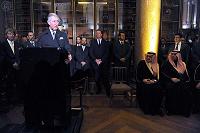
Through the vivid images and artefacts on display, the exhibition reveals the truly universal character of the Hajj, said His Royal Highness Prince Charles, heir apparent to the British throne, while inaugurating the Hajj Exhibition at the British Museum, on Thursday, the 26th of January 2012. He also added, “I cannot tell you what a pleasure it is to have been asked to open this splendid exhibition celebrating the Hajj; one of the five pillars of Islam and thus of the greatest possible significance to the spiritual and temporal lives of Muslim people across the entire world.”
The official opening of the Hajj Exhibition: “A Journey into the heart of Islam” was made in the presence of a large gathering of politicians, parliamentarians, academics and important figures in Britain, led by HRH Prince Abdul Aziz bin Abdullah bin Abdul Aziz, Deputy Minister of Foreign Affairs and Member of the Board of King Abdul Aziz Public Library; HRH Prince Mohammed bin Nawaf bin Abdul Aziz, Ambassador of the Custodian of the Two Holy Mosques in London and HE Mr. Faisal bin Abdul Rahman bin Muammar, General Supervisor of King Abdul Aziz Public Library.
Before the official inauguration of the Hajj Exhibition at the British Museum by Prince Charles, Prince of Wales and the heir apparent to the British throne, there were media lunch and media tour and conference. Immediately one day before the inauguration, there was media tour and press conference at the British museum on Wednesday, 25th of January and two days before the inauguration, there was Media Lunch at the Saudi Embassy, London, on Tuesday, 24th of January, 2012, detail reports are given below:
MEDIA TOUR AND PRESS CONFERENCE ON HAJJ
EXHIBITION AT THE BRITISH MUSEUM
Earlier, one day before the launch of the exhibition: “Hajj: A Journey to the Heart of Islam,” on Wednesday, 25th of January, 2012, a meeting with the members of the media from the British media, Arab and Islamic world was held at the British Museum. At the meeting, Saudi Ambassador to the United Kingdom, Prince Mohammed bin Nawaf, said, “Hajj provides wonderful examples of equality and peace among people. The Kingdom is concerned about people’s lives and is doing a lot to serve the pilgrims.”
Dr. Neil McGregor
In the beginning, Dr. Neil McGregor, the Director of the British Museum, explained the idea behind the Hajj Exhibition; its objectives and divisions. He pointed out the importance of Hajj as the fifth pillar of Islam and that it is one of the greatest phenomena in the world. He stated that the Hajj has a great impact on the lives of many people.
Mr. McGregor said, “It was not possible to have an exhibition on Hajj without the support and patron of the Kingdom of Saudi Arabia and the support of the Saudi Embassy, London.”
He added, “We cannot address all of the five pillars of Islam in this Exhibition, but it is enough to point out the Hajj in two ways: firstly, the spiritual experience pilgrims go through and secondly, the logistics of the Hajj.”
The Director of the British Museum went on to explain that this ritual was performed by Prophet Muhammad (peace be upon him) which dated back to Adam (peace be upon him) and through the ages until today. This made us address the method of transportation to Makkah (Mecca) throughout successive centuries down to the present.
Concluding his observations, Dr. McGregor thanked those who provided objects and artefacts to the exhibition including King Abdul Aziz Public Library in Riyadh. He also stated that “We need to remember that the duty and care for the Hajj rests on the shoulders of the ruler of Makkah” emphasizing that “this is important and central”.
He continued saying “Today this responsibility for the Hajj rests on the Kingdom of Saudi Arabia led by the Custodian of the Two Holy Mosques King Abdullah bin Abdul Aziz.” The Museum Director made it clear that “It was not possible to have an exhibition on Hajj without the patron and support of the Hajj; i.e. the Kingdom of Saudi Arabia. So we are honoured to have the presence of the Ambassador of the Custodian of the Two Holy Mosques, Prince Mohammed bin Nawaf bin Abdul Aziz here today.”
Prince Mohammed bin Nawaf
Saudi Ambassador Prince Mohammed bin Nawaf addressed the meeting where he thanked the British Museum, its Director and the Hajj Exhibition coordinator Dr. Venetia Porter, Assistant Curator of Islamic and Contemporary Middle East at the British Museum as well as Mr. Faisal bin Muammar.
Prince Mohammed bin Nawaf affirmed the importance of the Hajj in Islam and that it is an obligation upon every Muslim once in a lifetime if he is able, physically and financially. The Ambassador also said that “Pilgrimage comes on top of the concerns of Muslims and the trips they make whether they are men, women, old or young.” He pointed out that the exhibition provides only a glimpse of this great pillar of Islam and its evolution over the centuries.
Prince Mohammed bin Nawaf also stated that “The Hajj offers wonderful examples of equality and peace among humans, and the Government of the Kingdom of Saudi Arabia is keen on protecting people’s lives. This is a top priority for Saudi Arabia and this is why it spends a lot of effort and money to serve the pilgrims and to develop the Holy Sites and the two cities of Makkah and Madinah.”
At the end, the Saudi Ambassador reiterated his thanks for the presence of media and those in charge of the exhibition and expected a great success for the exhibition.
Dr. Venetia Porter
After that, Assistant Curator, Dr. Porter stated about the difficult decisions made by officials at the Museum on how it would reflect the great meaning of the Hajj which has been going on for centuries. Dr. Porter then said, “The exhibition is divided into three parts, the first is about the access roads to the Hajj and the means of transport for pilgrims. The second is on what the pilgrims do in Mecca and the holy sites; the performance of rituals and a description of the place through some of the expressive artefacts and paintings. The third part is on how the Hajj has changed the lives of pilgrims, a description of their journeys and what they brought back to their own countries from Makkah after performing the Hajj.”
The Curator at the British Museum pointed out to the precious artefacts as well as the fascinating old and modern photos which came to the exhibition from multiple sources, including, of course, King Abdul Aziz Public Library.
Dr. Porter gave an example of Darb Zubaydah where some artefacts from Museums in the Kingdom of Saudi Arabia dating back to the 8th century are on display.
Dr. Porter concluded her presentation with reference to the scene of standing in front of the Ka’aba which stunned the ancient and modern pilgrims and visitors to the Grand Mosque, who expressed their emotions in various means expressing the magnitude of this place and the holiness of this ritual.
After these brief statements, His Excellency Mr. Faisal bin Muammar, the General Supervisor of King Abdul Aziz Public Library led the media and journalists on a tour of the contents of the exhibition and answered their questions.
The British Museum has invited the media for a full day tour of the exhibition one day prior to its inauguration, where they moved freely inside the exhibition, took photos and conducted interviews. At hand was Dr. Ahmad Turkistani, the spokesman of King Abdul Aziz Public Library at the exhibition where he answered some of the reporters’ questions.
“Hajj celebrates peace, unity and our equality before God – men and women, of all ages, from every nation. It is a profound, life changing experience – it doesn’t guarantee a passage to heaven, but it focuses all Muslims on what is really important in life, as prescribed by our faith,” said Prince Mohammed bin Nawaf, Saudi Arabian Ambassador to the United Kingdom & Ireland at a Media Lunch on Tuesday, 24th of January 2012 prior to the British Museum Hajj Exhibition to be inaugurated on Thursday, the 26th of January, 2012.
The King Abdul Aziz Public Library of Saudi Arabia in cooperation with the British Museum is holding an Exhibition, Hajj: Journey to the Heart of Islam, which will be inaugurated on Thursday, the 26th of January, 2012 at the British Museum. His Royal Highness Prince Charles, Heir to the British Throne, is going to be the honorary guest for the inauguration of this exhibition and Prince Abdul Aziz bin Abdullah, the Deputy Minister of Foreign Affairs of the Kingdom of Saudi Arabia and a Member of the Board of King Abdul Aziz Public Library will be present at the inauguration ceremony among others. . The British Museum Hajj Exhibition will be opened from 26 January to 15 April, 2012.
The official opening of the Hajj Exhibition: “A Journey into the heart of Islam” was made in the presence of a large gathering of politicians, parliamentarians, academics and important figures in Britain, led by HRH Prince Abdul Aziz bin Abdullah bin Abdul Aziz, Deputy Minister of Foreign Affairs and Member of the Board of King Abdul Aziz Public Library; HRH Prince Mohammed bin Nawaf bin Abdul Aziz, Ambassador of the Custodian of the Two Holy Mosques in London and HE Mr. Faisal bin Abdul Rahman bin Muammar, General Supervisor of King Abdul Aziz Public Library.
Before the official inauguration of the Hajj Exhibition at the British Museum by Prince Charles, Prince of Wales and the heir apparent to the British throne, there were media lunch and media tour and conference. Immediately one day before the inauguration, there was media tour and press conference at the British museum on Wednesday, 25th of January and two days before the inauguration, there was Media Lunch at the Saudi Embassy, London, on Tuesday, 24th of January, 2012, detail reports are given below:
MEDIA TOUR AND PRESS CONFERENCE ON HAJJ
EXHIBITION AT THE BRITISH MUSEUM
Earlier, one day before the launch of the exhibition: “Hajj: A Journey to the Heart of Islam,” on Wednesday, 25th of January, 2012, a meeting with the members of the media from the British media, Arab and Islamic world was held at the British Museum. At the meeting, Saudi Ambassador to the United Kingdom, Prince Mohammed bin Nawaf, said, “Hajj provides wonderful examples of equality and peace among people. The Kingdom is concerned about people’s lives and is doing a lot to serve the pilgrims.”
Dr. Neil McGregor
In the beginning, Dr. Neil McGregor, the Director of the British Museum, explained the idea behind the Hajj Exhibition; its objectives and divisions. He pointed out the importance of Hajj as the fifth pillar of Islam and that it is one of the greatest phenomena in the world. He stated that the Hajj has a great impact on the lives of many people.
Mr. McGregor said, “It was not possible to have an exhibition on Hajj without the support and patron of the Kingdom of Saudi Arabia and the support of the Saudi Embassy, London.”
He added, “We cannot address all of the five pillars of Islam in this Exhibition, but it is enough to point out the Hajj in two ways: firstly, the spiritual experience pilgrims go through and secondly, the logistics of the Hajj.”
The Director of the British Museum went on to explain that this ritual was performed by Prophet Muhammad (peace be upon him) which dated back to Adam (peace be upon him) and through the ages until today. This made us address the method of transportation to Makkah (Mecca) throughout successive centuries down to the present.
Concluding his observations, Dr. McGregor thanked those who provided objects and artefacts to the exhibition including King Abdul Aziz Public Library in Riyadh. He also stated that “We need to remember that the duty and care for the Hajj rests on the shoulders of the ruler of Makkah” emphasizing that “this is important and central”.
He continued saying “Today this responsibility for the Hajj rests on the Kingdom of Saudi Arabia led by the Custodian of the Two Holy Mosques King Abdullah bin Abdul Aziz.” The Museum Director made it clear that “It was not possible to have an exhibition on Hajj without the patron and support of the Hajj; i.e. the Kingdom of Saudi Arabia. So we are honoured to have the presence of the Ambassador of the Custodian of the Two Holy Mosques, Prince Mohammed bin Nawaf bin Abdul Aziz here today.”
Prince Mohammed bin Nawaf
Saudi Ambassador Prince Mohammed bin Nawaf addressed the meeting where he thanked the British Museum, its Director and the Hajj Exhibition coordinator Dr. Venetia Porter, Assistant Curator of Islamic and Contemporary Middle East at the British Museum as well as Mr. Faisal bin Muammar.
Prince Mohammed bin Nawaf affirmed the importance of the Hajj in Islam and that it is an obligation upon every Muslim once in a lifetime if he is able, physically and financially. The Ambassador also said that “Pilgrimage comes on top of the concerns of Muslims and the trips they make whether they are men, women, old or young.” He pointed out that the exhibition provides only a glimpse of this great pillar of Islam and its evolution over the centuries.
Prince Mohammed bin Nawaf also stated that “The Hajj offers wonderful examples of equality and peace among humans, and the Government of the Kingdom of Saudi Arabia is keen on protecting people’s lives. This is a top priority for Saudi Arabia and this is why it spends a lot of effort and money to serve the pilgrims and to develop the Holy Sites and the two cities of Makkah and Madinah.”
At the end, the Saudi Ambassador reiterated his thanks for the presence of media and those in charge of the exhibition and expected a great success for the exhibition.
Dr. Venetia Porter
After that, Assistant Curator, Dr. Porter stated about the difficult decisions made by officials at the Museum on how it would reflect the great meaning of the Hajj which has been going on for centuries. Dr. Porter then said, “The exhibition is divided into three parts, the first is about the access roads to the Hajj and the means of transport for pilgrims. The second is on what the pilgrims do in Mecca and the holy sites; the performance of rituals and a description of the place through some of the expressive artefacts and paintings. The third part is on how the Hajj has changed the lives of pilgrims, a description of their journeys and what they brought back to their own countries from Makkah after performing the Hajj.”
The Curator at the British Museum pointed out to the precious artefacts as well as the fascinating old and modern photos which came to the exhibition from multiple sources, including, of course, King Abdul Aziz Public Library.
Dr. Porter gave an example of Darb Zubaydah where some artefacts from Museums in the Kingdom of Saudi Arabia dating back to the 8th century are on display.
Dr. Porter concluded her presentation with reference to the scene of standing in front of the Ka’aba which stunned the ancient and modern pilgrims and visitors to the Grand Mosque, who expressed their emotions in various means expressing the magnitude of this place and the holiness of this ritual.
After these brief statements, His Excellency Mr. Faisal bin Muammar, the General Supervisor of King Abdul Aziz Public Library led the media and journalists on a tour of the contents of the exhibition and answered their questions.
The British Museum has invited the media for a full day tour of the exhibition one day prior to its inauguration, where they moved freely inside the exhibition, took photos and conducted interviews. At hand was Dr. Ahmad Turkistani, the spokesman of King Abdul Aziz Public Library at the exhibition where he answered some of the reporters’ questions.
“Hajj celebrates peace, unity and our equality before God – men and women, of all ages, from every nation. It is a profound, life changing experience – it doesn’t guarantee a passage to heaven, but it focuses all Muslims on what is really important in life, as prescribed by our faith,” said Prince Mohammed bin Nawaf, Saudi Arabian Ambassador to the United Kingdom & Ireland at a Media Lunch on Tuesday, 24th of January 2012 prior to the British Museum Hajj Exhibition to be inaugurated on Thursday, the 26th of January, 2012.
The King Abdul Aziz Public Library of Saudi Arabia in cooperation with the British Museum is holding an Exhibition, Hajj: Journey to the Heart of Islam, which will be inaugurated on Thursday, the 26th of January, 2012 at the British Museum. His Royal Highness Prince Charles, Heir to the British Throne, is going to be the honorary guest for the inauguration of this exhibition and Prince Abdul Aziz bin Abdullah, the Deputy Minister of Foreign Affairs of the Kingdom of Saudi Arabia and a Member of the Board of King Abdul Aziz Public Library will be present at the inauguration ceremony among others. . The British Museum Hajj Exhibition will be opened from 26 January to 15 April, 2012.