Tuesday, 18 September 2018

Fasting in Ashoorah - Significance of the Month of Muharram

 Importance and Significance
of the Month of Muharram

Dr. Mozammel Haque

The month of Muharram is important and it has so many significances. First of all, it is not only one of the twelve months of the Hijri calendar but it is the first month of the Hijri calendar. Secondly, it is also one of the four sacred or forbidden months of the Hijri calendar. Allah Subhanahu wa Taala said about the Ashhur ul Hurum, the sanctified four months, one of them is the month of Muharram. In the following paragraphs, I am going to discuss, narrate and explain the following subjects – such as Four Sacred Months, Ashhur ul Hurum, the Holy Places and Holy Times chosen by Allah Subhanahu wa Taala, Fasting in the month of Muharram, especially fasting in the day of Ashoorah, expiation of sins – small and big; Karbala – the Martyrdom of Hazrat Hussein on the day of Ashoorah accidentally and lastly the beginning of Hijri calendar. This is based on a talk given by Dr Ahmad al-Dubayan, the Director General of The Islamic Cultural Centre & the Regents Park Central London Mosque, London, on Muharram on Saturday the 15th of September 2018.

Four Sacred Months
Dr. Ahmad al-Dubayan first mentioned about the four sacred months in the Hijri calendar and one of them is the month of Muharram. He said, “There are always four months in a year. These months are sacred actually they are holy months but they are not like Ramadan. These months are Dhul Qaida, Dhul Hijja, Muharram and Rajab. These four months according to the Hijri calendar are the sacred months – Ashhur al Hurum. Allah Subhanahu wa Taala said this in the Qur’an. The Holy Qur’an says, "The number of the months according to Allah is twelve months (mentioned) in the Book of Allah on the day in which He created heavens and the earth. Among these (twelve months) there are four sanctified”.


These four months, according to the authentic traditions, are the months; these months are Dhul Qaida, Dhul Hijja, Muharram and Rajab. All the commentators of the Holy Qur’an are unanimous on this point, because the Holy Prophet Sallalahu Alayhe Wassallam in his sermon on the occasion of his last Hajj, has declared:"One year consists of twelve months, of which four are sanctified months, three of them are in sequence; Zulqadah, Zulhijjah, Muharram, and the fourth is Rajab."

Dr. al-Dubayan mentioned, “Allah said, don’t be unfair unjust to yourself during this time. It means you have to avoid conflict and wrong things especially in these four months. Of course every Muslim is asked every time but it is more confirmed in these four months. These are the months - Dhul Qaida, Dhul Hijja, the month of Hajj and this month, Muharram and Rajab, which is going to come inshaallah. Rajab is the seventh month of the Hijri calendar.”

The word Muharram itself means sacred or forbidden. Why they call it like this? Dr. al-Dubayan mentioned, because Arabs used not to fight; not to do any problem or dispute with other tribe especially during these four months even before Islam. May be this is one of the remaining of the traditions of Prophet Ibrahim (peace be upon him).”

Thus, the sanctity of these four months was recognized right from the days of Sayyidina Ibrahim. Since the Pagans of Makkah attributed themselves to Sayyidina Ibrahim they observed the sanctity of these four months and despite their frequent tribal battles, they held it unlawful to fight in these months. In the Shari’ah of our Holy Prophet Sallalahu Alayhe Wassallam the sanctity of these months was upheld and the Holy Qur’an referred to them as the "sanctified months".

In the Hijri calendar there are twelve months out of which these four months are sacred or forbidden months. Dr. al-Dubayan said, “Among these twelve months there are four months - the forbidden or sacred months – do not be unfair with yourself in these four months. Even the Companion of the Prophet Sallalahu Alayhe Wassallam Ibn Abbas said; if somebody commits sins in these four months it is even bigger more than the other times. Of course respect of the Shari’ah, of the teachings of Allah Subhanahu wa Taala must be more during these four months.”

Dr. Al-Dubayan said, “Nowadays we forget these four months. We just live in just like any other days. Muharram starts; or Safar or Rabi al Awwal do not have any meaning for us. We are always busy in this Dunya; we do not pay that much attention to these four months. We have to keep more of these four months  in our mind - Dhul Qaida, the month before the Hajj, the Dhul Hijja, the month of Hajj  and the next month, the month of Muharram which is we are now in and then the Rajab, the seventh month of the Hijri calendar.”

Dr. al-Dubayan continued, “As I said, the Arabs, even before Islam, stopped fighting during these four months. If somebody has revenge against someone who has killed his brother or father; he during these months does not do anything to him. He waits till actually the time passes when he is no longer in these months any more. New month starts; then they go back to their normal life. This is how they respect this.”

Chosen Holy Times and Holy Places
After mentioning about the four sacred or forbidden months of the Hijri calendar, Dr. al-Dubayan spoke of the holy times and holy places. He said, “Allah Subhanahu wa Taala chooses certain places and certain times to be holy times and to be holy places. There are certain rituals for this. Allah is the One who decides this, not us. For example, the month of Ramadan, this is the time, this is the holy month. The Lailatul Qadr, which Allah Subhanahu wa Taala asks us to do our best to seek in the month of Ramadan - the Lailatul Qadr, to pray during the Lailatul Qadr. This is Allah Subhanahu wa Taala decided.”

“Allah Subhanahu wa Taala decided the last ten days of Ramadan as Lailatul Qadr, to pray during this Lailatul Qadr; the Yaum ul Arafah, the day of Arafah, the Ashoorah, which is going to come next Thursday. These things are decided by Allah Subhanahu wa Taala, not by us, not by people. For each day there are some teachings; sometimes fasting, sometimes praying. For example, Lailatul Qadr for more prayer; the Day of Arafah, fasting for those who are not in Hajj; the Day of Ashoorah, I am going to talk about this day of Ashoorah,” Dr. al-Dubayan said.

Chosen Holy Places
Dr. al-Dubayan then mentioned about certain holy places. Allah Subhanahu wa Taala has decided about these holy places – for example, Masjid al-Haram in Makkah; Masjid al-Nabawi in Madinah and Masjid al-Aqsa. Dr. al-Dubayan mentioned, “There are certain places Allah Subhanahu wa Taala grants them His blessings and call them the holy places, one of them is Masjid al-Haram in Makkah. Allah Subhanahu wa Taala calls this Masjid al-Haram. The Prophetic Mosque in Madinah, the Masjid al-Nabawi; Allah Subhanahu wa Taala said who pray here he call them equals to 1,000 prayers than anywhere else. And one prayer in Makkah in Masjid al Haram equals to 100,000 prayers. Can you imagine how the blessings in these places? If you pray one time in Masjid al Haram in Makkah as if you pray 100,000 times than somewhere else. If you pray at the Masjid of the Prophet Sallalahu Alayhe Wassallam it is equal to 1,000 prayers. If you pray at Masjid al-Aqsa it is equal to 500 prayers. We cannot add any other mosque on earth in this list of chosen holy places - mosque. It is Allah Subhanahu wa Taala who decides this, not us and nobody. This is very very important for all of you”

“Nobody can tell you - it is preferable to pray at this place or fast that day or to fast here or to pray here without the daleel of Kitab or Sunnah. Because it is Allah Subhanahu wa Taala who decides that. How do we know about Ashhur ul Hurum the four sacred or forbidden months? I told you. It is mentioned in the Qur’an. How do we know about Masjid al-Haram; if you pray there it is more than 100,000 prayer, because the Prophet Sallalahu Alayhe Wassallam said in the Hadis Sahih. How do we know the prayer at the Masjid al-Nabawi equals to 1,000, because Prophet Sallalahu Alayhe Wassallam said that. We cannot say, for example, go there; it will be 100 or less or more; we cannot. You cannot choose any other place and say this is really preferable; similarly you cannot say to fast that day without proof; without daleel from the Kitab and Sunnah - the Qur’an and Sunnah, the traditions of the Prophet Sallalahu Alayhe Wassallam. I always advice you when someone tells something; you ask where it is? show me the daleel whether it is in the Qur’an or the Hadis Sahih of the Prophet Sallalahu Alayhe Wassallam This is very important,” mentioned Dr. al-Dubayan.

Dr. al-Dubayan then mentioned about lot of fake stories invented by people in the Muslim world. He said, “Many people created lot of things in the Muslim world. If you pray there mashallah there will be more benefits. How do you know? Can you show daleel? did the Prophet said that? No. One of the followers of the Companions came to Abdullah al-Masood and said to him, I just come from Tur, the mountain where Allah Subhanahu wa Taala talked to Moosa alayes Salam it is in Sinai. This man witnessed the visit to that place, the mosque there, the place itself. And then he came to Abdullah al-Masood or Abu Hurairah; he said I just come; why did you go there; he said I wanted to pray there. He said, listen, I heard Prophet Sallalahu Alayhe Wassallam saying: nobody travel to pray besides these three mosques - Masjid al-Haram in Makkah, The Masjid al-Nabawi, the Prophet’s Mosque in Madinah and Masjid al-Aqsa. These three places you can travel just to pray. So the Companions of the Prophet Sallalahu Alayhe Wassallam never travel just to pray except these three places. Why? Because there is no daleel from the Kitab or Sunnah. it is said it is sacred or it is holy place; it is a place where there is given blessings. This is one of the principles of Aqidah you have to remember; I have told you all the time. Brothers and sisters, you have to remember this; anybody tells us about any mosque, ask where is this in the Qur’an or the Sunnah of the Prophet Sallalahu Alayhe Wassallam.”

Fasting in the month of Muharram
The Prophet Muhammad Sallalahu Alayhe Wassallam used to fast a lot in the month of Muharram, this month; of course not fasting the whole month like Ramadan. But may be, every week two days three days; it is a Sunnah to fast as many as you can; or as much as you can in the month of Muharram, this month. But don’t fast like Ramadan. So, one day a week or two days a week according to what you can. This is a Sunnah; it is not a duty, of course. It’s not wajib; this is one of the principles of this month. In this month, there is a day of Ashoorah. What is a day of Ashoorah? The Day of Ashoorah is the tenth day of Muharram. The word Ashoorah came from the word ashara in Arabic. Ashara means ten.

Treaty of Madinah
Dr. al-Dubayan mentioned about the beginning of Ashoorah. He said, “The Prophet Sallalahu Alayhe Wassallam came to Madinah, he stayed in Madinah and established first the Muslim community in Madinah as we all know. There was in Madinah some Jewish tribes, Jewish community. The Prophet Sallalahu Alayhe Wassallam closed a Treaty with the Jewish community, which we called the Treaty of Madinah. According to this Treaty, not to fight with each other; to be fair with each other, not to hate some others against others. This is like a political agreement between the Muslims and the Jews in the Madinah itself; to share together, to live together as one society as it was mentioned in the Treaty which the Prophet Sallalahu Alayhe Wassallam himself signed.”

Fasting on the Day of Ashoorah
Why we had started to fast on the day of Ashoorah? Dr. Ahmad al-Dubayan narrated the story behind the start of the fasting on the Day of Ashoorah. He said, “One of the things Prophet Sallalahu Alayhe Wassallam noticed in Madinah; Jews at that time used to celebrate a certain day.   The Prophet Sallalahu Alayhe Wassallam asked them why you celebrate this day; they said we celebrate this day thanking Allah Subhanahu wa Taala because He has saved Moses, the Prophet Moses (peace be upon him) with his people from the Pharoah of Egypt and to save them from the land there, to the holy land. The Prophet Sallalahu Alayhe Wassallam said, we are closer to Moosa then. Why? Because the call of the Prophet Sallalahu Alayhe Wassallam, the message of the Prophet Sallalahu Alayhe Wassallam is Tawheed and the message of the Prophet Moosa (peace be upon him) is Tawheed. So the Prophets, all of them, came with the same message, the Tawheed, La ilaha Illalah.”


“Anybody who comes with this, he comes closer to the Prophet and anybody who goes away from this, he goes away from the Prophet. So the Prophet Sallalahu Alayhe Wassallam said, I am Prophet, he is Prophet and so I am closer to him. We will then celebrate this; do this in another way. How? Then the Prophet Sallalahu Alayhe Wassallam asked Muslims to fast that particular day. At that time the day was the day of Ashoorah, the tenth day of this month of Muharram, which is coming inshaAllah in the next Thursday. Prophet Sallalahu Alayhe Wassallam fasted in that time and he asked the Companions to fast next year; he said if you fast next year, you fast another day with it either before or after. This is to be different from the Jewish community. Muslim community at that time in this ritual would be different. This is the beginning of it; this is a Sunnah,” Dr. al-Dubayan mentioned.

Expiation of Sins
Dr. al-Dubayan also said about a Hadith Sahih of the Prophet Sallalahu Alayhe Wassallam. He said, “The Prophet Sallalahu Alayhe Wassallam said in another Hadith Sahih; I am asking Allah Subhanahu wa Taala this day to delete the small sins, the minor sins of everybody one year before; this means if you fast on this day with good intention, of course Allah Subhanahu wa Taala will remove from your record all the small sins that was done in the last year; the small ones, not the big ones. The big things; no. This prayer if you pray every time the small things will be deleted but not the big things. Big things you have to make Tauba; you have to have the Taubah. It is very very important.”

“This is also the same with Ramadan; the same with Jumah, the same with the day of Arafah; one year after or one year before. Some people think; okay, no problem. Whatever you did wrongs and then you can fast Arafah or Ashoorah Allah Subhanahu wa Taala washes away all the sins you have done.  Allah will wash away from you and delete the minors or small ones, not the big ones; not the Riba, not the adultery, not the violating of the rights of parents. For these big things, no,” mentioned Dr. Al-Dubayan.

The day before Ashoorah which is ninth; in Arabic it is called Teesa, the word comes from the number Teesa. Dr. al-Dubayan said, “Most Muslims actually fast Taswah which is the 9th and the 10th. Why? In case, there is a mistake in the beginning of the month and they will definitely have the 10th day; of course; if you do your best and if you fast and later on you find that you fast the wrong day not the right day; you follow the wrong calendar, Allah will reward you for fasting exactly because this is the best you have done. Allah wanted to do the best; not to know everything completely absolutely. The absolute knowledge is for Allah Subhanahu wa Taala, not for us.”

Karbala – Martyr of Hazrat Hussein
Dr. al-Dubyan narrated the history of Karbala – the martyrdom of Hazrat Hussein in brief. He mentioned, “Fifty days after this, Prophet Sallalahu Alayhe Wassallam passed away in the year 11 Hijri. He went for Hajj in the year 10 Hijri. Then the Prophet Sallalahu Alayhe Wassallam came back. Few months after the Hajj, he passed away, he died. Fifty years after, Hussein bin Abu Talib was moving to Karbala in Iraq and there he was killed; he was killed accidently on that day of Ashoorah. That was fifty years after. This means fifty years after the death of Prophet Sallalahu Alayhe Wassallam; after Abu Bakr, Umar, Othman, and Ali himself; then Hussein was killed; the year was 61 Hijri precisely. Of course everybody was regretting what had happened. Everybody said who killed him they were criminals, they were wrong; there is no doubt about this. No Muslims on earth is happy about what had happened that day at all.”

“But we are also following the Prophet Sallalahu Alayhe Wassallam. We cannot add to the day of Ashoorah anything the Prophet Sallalahu Alayhe Wassallam did not do it.  Some people exaggerate about this; they make rituals especially for the day which is not Sunnah to show sadness; for example, to wear black dresses etc. In the Sunnah it is not done that way. We follow our prophet; to fast this day to follow the Prophet Sallalahu Alayhe Wassallam; anything else more than the Sunnah don’t do it; that’s the wrong. We said that. Even the Khulafah Arba, the four Caliphs, Abu Bakr, Umar, Othman, Ali did not do anything on that day more than fasting,” mentioned Dr. al-Dubayan.


Bidah
Dr. al-Dubayan also continued, “This is all created after. It was not even created 50 years after. It was created 300 years after. That was in the third century. All these rituals you see, all these caravans, festivals, this was created in the fourth century; not in the first, not in the second. You have to be aware of this. Other people also make other things; they add certain other things; they do certain kind of foods, certain people dress themselves white on that day to show their happiness because of the killing of Hussein. This is something very awful. Nobody says they are happy about what had happened. This is a matter of rituals; it is not a matter of traditions. Wearing white, cooking certain food, cooking rice, giving something – these are all bidah. That was added all to the Sunnah. The Prophet Sallalahu Alayhe Wassallam did not do this. The Four Caliphs did not do it; the great Imams, the Imam Hanifah, the Imam Safieh, the Imam Maliki, the Imam Ahmad did not do it. These are all created after. We stick to the Qur’an and the Sunnah of the Prophet Sallalahu Alayhe Wassallam. This is very very important I have to mention it.”

Fake Hadiths relating to Ashoorah
Dr. al-Dubyan then mentioned some of the fake Hadiths made relating to Ashoorah. He said, “You will find some fake Hadith; fake made just for Ashoorah; one of them for example, he who spends more money Allah will give him more money for the year; this is fake Hadith, it is not true. Somebody fake this to celebrate or to do something. This is fake, this is not true; not Hadith. Some people drink milk on that particular day; this is also bidah, this is not Sunnah. Just follow Prophet Sallalahu Alayhe Wassallam.”

“When Prophet Sallalahu Alayhe Wassallam died, when he passed away, everything in the religion was clear. He told us everything; nothing hidden; he did not hide anything; he did not give any special thing to certain people only for other things. The Qur’an is for all of us; the Sunnah is for all of us; so if anybody told you that some part of the Qur’an is only for certain people; don’t believe this. If someone tells you there are some Hadiths only for some people, nobody knows about them especially for this person; it is not true,” said Dr. al-Dubyan.

Prophet Mercy for whole Mankind
“Why? Because Allah Subhanahu wa Taala says in the Qur’an we just send you as a Mercy for the whole Mankind for the whole world. How the Prophet Sallalahu Alayhe Wassallam would be mercy for me, for him, for her for everybody when something is hidden. How come the Prophet Sallalahu Alayhe Wassallam talk about equality of man; all mankind are equal. Prophet Sallalahu Alayhe Wassallam said there is no superiority for any Arab for someone not Arab; for any white for someone who is black. You are all equal; you are brothers and sisters; your father is one and your mother is one. And your father is Adam and your mother is Hawwa, Eve. That means we come from the same father and the same mother. So we always put borders saying I am better than you and you are better than that,” mentioned al-Dubyan.

Hijri Calendar
Seven years exactly after the death of the Prophet Sallalahu Alayhe Wassallam Hijri calendar was started. (It will be dealt with in detail in the next issue)


Tuesday, 14 August 2018

Good Deeds During the First Ten Days of Dhul Hijjah

Importance of the First Ten Days of Dhul Hijjah

Dr. Mozammel Haque

Sunday 12 August 2018 is the First day of Dhul-Hijjah 1439H. So the Day of Arafah will be on Monday the 20th of August 2018 the 9th day of Dhul Hijjah the Arafah day and Eid al-Adhaa will be Insha’Allah on Tuesday 21 August 2018 corresponding to 10 Dhul-Hijjah 1439H after the day of Arafah. I wish everyone a blessed life full of happiness, peace and prosperity.

Eid Mubarak to all of you and your families and everyone. Kullu Aam wa Antum bil Khair.

Now this first ten days of the month of Dhul Hijjah is very important and significant. Those who have gone for Hajj they will be in Makkah, Mina, Arafah and Muzdalifah. But those who are not in Makkah and other holy sites for them these days are very important days too. The earlier Muslims used to take this opportunity to make themselves better.

Dr. Ahmad Al-Dubayan on Dhul
Hijjah and Day of Arafah
Speaking about these days Dr. Ahmad al-Dubayan the Director General of the Islamic Cultural Centre, London, said on Sunday, the 12th of August 2018 at the Library Hall of the Centre, “When we say Aml as saleh as the Prophet Muhammad (peace be upon him) said it covers everything not only as some people think only fasting, for example or not only giving alms to the poor and needy; no; it covers everything.”

First Aml As Saleh– Takbeer
There are many good deeds which can be done during these first ten days of the month of Dhul Hijjah. Last Sunday was the first day of the month of Dhul Hijjah and there are still ten days till the tenth day when there will be Eid day. One of the Aml as Saleh, according to Dr. al-Dubayan, is saying Takbeer. He said, you can do the Aml as Saleh by saying these days Takbeer: Allahu Akbar Allahu Akbar Allahu Akbar la ilaha illalla Allahu Akbar Allahu Akbar Allahu Akbar wa lillahil hamd.

These ten days any time not only related to after prayer. After prayer Takbeer. will come after the Eid day for three days. But now till the day of Eid you can Takbeer. any time. You can do it when you are sitting, you can do it when you are at home, you can do it in your car or when you are walking whatever. Allahu Akbar Allahu Akbar Allahu Akbar la ilaha illalla Allahu Akbar Allahu Akbar Allahu Akbar wa lillahil hamd. This is one of the good actions or good deeds Allah Subhanahu wa Taala likes it to be done in these days, explained Dr. al-Dubayan.

Dr. Al-Dubayan also mentioned an incident. He said, Hazrat Umar (Allah be pleased with him) during these days used to go to the market where people buy and he used to remind them of the Takbeer during these days by saying loudly Allahu Akbar Allahu Akbar Allahu Akbar la ilaha illalla Allahu Akbar Allahu Akbar Allahu Akbar wa lillahil hamd.

Another good deed – Fasting
Dr. al-Dubayan also said, One of the good things we can do is fasting;  we can fast one day, two days, three days or four days as many as you want. But do not fast on the Eid day; because fasting on the Eid day is harm. Because Eid day is a day of joy, day of eating, day of drinking; it is a day of celebration. So you can fast one day or two or three.

Another good deed – Visiting family relations
Dr. al-Dubayan also said, “One of the good deeds you can do is visiting your families, your uncles, your cousins, your brothers your sisters, doing best for your parents, or anybody who is around from your families visit him or visit her try to show them your kindness with the intention that you are doing your duty for the sake of Allah Subhanahu wa Taala.

Giving charity to needy and poor people
The ICC Chief also said one of the good things which you can do is to give charity to the needy, to give charity to the poor people, whatever it is, small or big. Don’t think big money will be accepted by Allah Subhanahu wa Taala only. Sometimes you give little will be better in the sight of Allah than someone who gives a lot. That’s why the Prophet peace be upon him said one dirham is better than one thousand dirham in sadaqa. Why? That person who gives one dirham he gives with the pure intention for the sake of Allah. Another one who gave one thousand dirham may be gave it for other reason - to be seen by people; to be praised by people whatever. So this one dirham is better, explained Dr. Al-Dubayan.

Taking care of children, orphans
ICC Director General mentioned, one of the good things is in these days really “to take care of your children; taking care of orphans if they are around you; especially if they are within your family. For example if you have nephew or niece, cousins you give them more care; show them love and affection especially in these days. You have to show always but to show them in these ten days are more beneficial. Because Allah Subhanahu wa Taala likes to see all goods deeds in these ten days. Prophet peace be upon him was asked by somebody; he said: what is jihad fi Sabilillah? He said is it better? Prophet peace be upon him said, anything you do in these days better than the jihad except if someone goes for jihad with all his money, his life; never return back everything lost; that person gives his all properties and give his life for the sake of Allah Subhanahu wa Taala. May be this one is better. But nothing else is better than that doing hasanah good deeds during these days, explained Dr. al-Dubayan.

Season of Good Deeds
Dr. al-Dubayan said we have ten days like a season of good deeds, two times a year. One is the last ten days of Ramadan; this is a season why because the Lailatul Qadr is there, may be the first, the second or third till the end of Ramadan. Then we have the first ten days of Dhul Hijjah. Now these ten days are for doing hasanah or good deeds. Anything even talk to people is good. If somebody angry with you for any reason or other try to fix it; if you did wrong to some body, try to fix it; even if he or she does not know about it. Try to clean yourself before the day of Eid.


Arafah Day 9th of Dhul Hijjah
Dr. Al-Dubayan explained the Day of Arafah. He said, the last day before the Eid, the day number 9th, we call it the day of Arafah the 9th day. People on Hajj they will stand on Arafah, that day standing on Arafah day; it is a very very holy day in the ten days. On that day it is Sunnah to fast for those who do not perform Hajj. We are here in London or anywhere who is not in Makkah we fast on the 9th Dhul Hijjah the day of Arafah. That’s why, Prophet peace be upon him said, “I am asking Allah for those fast on the day of Arafah to forgive their sins for one year before Arafah and one year after Arafah. It is an important day, explained ICC Chief.

Prophet (peace be upon him) always talked about forgiveness. Dr al-Dubayan said we have to remember forgiveness for all the things between us and Allah Subhanahu wa Taala. But not peoples rights. This is a misunderstanding of the Hadith. Because peoples rights must be taken care of.

Day of Arafah is the Day of Mercy
Asking Forgiveness
Dr. al-Dubayan also explained, Day of Arafah is the Day of Mercy; the Day of Praising Allah Subhanahu wa Taala. Allah Subhanahu wa Taala.forgives so many peoples. That’s why, it is really important on the Day of Arafah to make Takbeer and to make dua supplication always to Allah Subhanahu wa Taala asking forgiveness for us for all Muslims; for the loved ones; for all families; asking guidance for yourself; for our husband; for our wives; for our children; for everybody. It is a day of mercy and also forgiveness and comfortable for all people around the world. Anybody you can ask Allah Subhanahu wa Taala you have relatives or friends or somebody you like or she or he is not Muslims; ask Allah Subhanahu wa Taala to guide him or to guide her to the right path. You can make dua for those who are not Muslims to give them guidance from Allah Subhanahu wa Taala.

Guidance is in the hand of Allah
Another important thing one must try to understand is that showing light or Guidance is from Allah and not from people. Dr. al-Dubayan explained this aspect of Guidance. He said it is very close to Islam. People could not see the light of it. Many people read the Qur’an; speak the Arabic; read Islamic books but they don’t see the light. But some other people see the light just away far away and see this light and they come to Islam. Allah Subhanahu wa Taala directs them. Guidance is in the hand of Allah. He can guide someone in the light even by explaining convincing a person.

That’s why; Dr. Al-Dubayan said you have to ask Allah Subhanahu wa Taala for the guidance for the people you like. He gave an example of Prophet’s uncle Abu Talib. He said Prophet (peace be upon him) he himself wanted his uncle Abu Talib to come into the fold of Islam. But he could not. They loved each other. Abu Talib used to protect Prophet (peace be upon him) all the days in Makkah; because Abu Talib was one of the leaders of the people; he led the Quraish people in Makkah and all of them respected him. They respected him so much that when he said something they followed him. He protected Prophet Muhammad (peace be upon him) his nephew. Prophet (peace be upon him) received all the protection from Abu Talib; he loved so much. Prophet (peace be upon him) was so keen for his uncle to become Muslim but he could not make it. He could not make it. Allahu Akbar. Then he was so sad for that, he was so sad; then Allah Subhanahu wa Taala revealed to him in the verse of the Qur’an which says you cannot guide those people who love but it is only Allah who guide people.

That’s why, Dr. al-Dubayan said and advised it is good that when we pray we asked Allah to guide those people we like to guide. Dr. Al-Dubayan also mentioned some people come to Islam just in one bleak. Something happened to them my God this is it. Whereas, some people stay with Muslims many years, they do not see those light. Even the Qur’an is in front of them and they do not see the light. And sometimes the Qur’an is very close; Islam is very close and when the moment comes when Allah wants them to be guided then he guided to go there. In this connection Dr. Al-Dubayan narrated the story of conversion of Cat Stevens to Islam as Yusuf Islam.


Dr. Al-Dubayan advised Muslims to remember every people on the Day of Arafah. He said, “When you pray on the day of Arafah please remember all those people; all those people who have difficulty in their life;  remember the refugees; remember the poor people; remember the orphans; remember people who have difficulties;  ask Allah Subhanahu wa Taala to make it easy;  ask Allah Subhanahu wa Taala to give guidance to the people you like; ask Allah Subhanahu wa Taala to keep on the right path because some people some Muslims after sometimes have sometimes misconception in your mind  or misunderstanding or doubts; then the devil started to play with you. That’s why you see some people go out of Islam again. Ask Allah Subhanahu wa Taala to keep you till the last moment of your life on the right path. This is what Prophet (peace be upon him) used to ask Allah Subhanahu wa Taala to let him stay on the right path till the last minute of your life. 

Saturday, 11 August 2018

Hajj : The Fifth Pillar of Islam

Hajj: The Fifth Pillar of Islam

Dr. Mozammel Haque


[The First of Dhul-Hijjah 1439H will be on Sunday 12 August 2018. Islamic Cultural Centre & Regents Park Central London Mosque congratulates all Muslims in the world and wants to take this opportunity to ask Allah the Almighty to accept all our deeds. It also announces Eid al-Adhaa will be on Tuesday 21 August 2018 corresponding to 10 Dhul-Hijjah 1439 after the day of Arafah. I wish everyone a blessed life full of happiness, peace and prosperity.]

ISLAM IS A PRACTICAL RELIGION which lays down a complete code of life. Its training starts from childhood. The final pillar of Islam or the Fifth Pillar of Islam comes after the successful completion of the first four pillars of Islam. The training of five times prayer every day started from the local Masjid, meeting with local people, with neighbours five times every day.


But the ultimate objective or the summum bonum of Islam is establishing peace and harmony in the whole universe, and for that reason, it makes various provisions for creating peace and harmony in the lives of mankind as well as in the universe. Peace and harmony can be achieved only when there is solidarity and universal brotherhood among human beings. Islam preaches this concept and puts it into practice through the unique annual assemblage of the pilgrims during Hajj.

The institution of Hajj in Islam is quite extraordinary and unparalleled. It is only Islam that has made the annual assemblage at one place, Makkah, an obligation for the capable Muslims from all corners of the world. In other words, it may be called the World Muslim Congress. This assembly has many distinctive features which no other gathering has and no other religion stipulates. The concept of unity and brotherhood is embedded in Islam in such a way that one is truly amazed to see millions of Muslims dressed in two white sheets of cloth gathered at one particular place, i.e. in Arafat during a fixed time on certain fixed days in the year. All human and man-made barriers and distinctions are demolished during that assembly.

We shall deal here with the aspects of unity and universal brotherhood which, besides others, are quintessential among the concepts of Hajj. First, let us take universal brotherhood. This universal brotherhood emanates from the following basic concepts and is demonstrated in a most authentic and brilliant manner here on this occasion:

Adam is the first man from whom all human beings have sprung up;
Abraham is the father of monotheistic religion;
Acceptance of all prophets as prophets of God;
Belief in all revealed books of Allah.

Thus, this acceptance of Abraham as the patriarch of the concept of Tawheed and recognition of the continuity of Prophethood from Prophet Adam to the Last Prophet Muhammad (peace be upon him all) and having faith in all revealed books keeps up a chain of faith known as Islam throughout the world. This binds the whole humankind into a bond of brotherhood whose genealogical father is Adam and the spiritual father Abraham. Thus Muslims believe in the continuation of the human race on earth. There are no conflicts and controversies in the monotheistic religion decreed by God. All Muslims (those who consciously and willingly surrender to the Will of the Creator) belong to this Ummah and therefore constitute a fraternity of faith. This is one way the Hajj conveys the message of universal brotherhood.

This aspect of universal brotherhood can also be noticed during Hajj when Muslims come from remote corners of the world and congregate in Makkah in the vicinity of the House of God, i.e. Baitullah. Though they might have come from the east or west, north or south, and all differences in colour, language, race and nationality notwithstanding, they find their oneness on the basis of their faith in One God, One Qiblah, One Book and One Prophet.

The practical training for this universal brotherhood starts from the local or neighbourhood level with the five times daily prayers in the mosque, which gets enlarged with the Friday prayers once a week. The circle is again made substantially larger during the Eid prayer, and it becomes internationalised transforming into a global gathering once in a lifetime. So, as I mentioned at the beginning, the concept and training in universal brotherhood, which reaches its peak, starts from the very childhood at the local level.
  Box
Islam places emphasis on unity and unifies mankind 
on the basis of one God, one Book - the Qur’an, 
one Qibla - the Ka’aba and one leader - 
the Prophet Muhammad (peace be upon him). 
The Noble Prophet’s mission was to establish unity 
and peace throughout the world. The Islamic concept of unity 
transcends all other forms of unity based on territory, 
geographical boundary, linguistic and ethnic affinity. 
He united Muslims on the basis of faith, 
which is the Oneness of God, Islam.

As regards unity, Islam, first of all, removed all man-made bonds and barriers bringing all human beings into one global family tracing their genealogical origin to common parents and biological chemistry to one element, i.e. clay. Almighty God has laid down in the Holy Qur’an, “O Mankind, We have created you from a male and a female.” (49: 13) This establishment of absolute equality on the basis of their ancestral origin and biological composition removes all artificial differences between man and man.

The enforcement of the concept of Muslim brotherhood is the greatest social ideal of Islam. Islam places emphasis on unity and unifies mankind on the basis of one God, one Book - the Qur’an, one Qibla - the Ka’aba and one leader - the Prophet Muhammad (peace be upon him). The Noble Prophet’s mission was to establish unity and peace throughout the world. The Islamic concept of unity transcends all other forms of unity based on territory, geographical boundary, linguistic and ethnic affinity. He united Muslims on the basis of faith, which is the Oneness of God, Islam.

On this vital concept was based the Prophet’s sermon in his last pilgrimage, which shows that Islam cannot be completely practiced until this ideal is achieved. Prophet Muhammad (peace be upon him) unified and cemented the Muslim Ummah under the banner of La ilaha illallah Muhammadur-Rasoolullah by establishing the first-ever Islamic state in Madina, which later on took the shape of a grand Caliphate. Under the Caliphate the Muslim Ummah was unified and integrated. Thus the first concept of universal and worldwide unity was demonstrated by Prophet Muhammad more than fourteen hundred years ago having been guided and inspired by God for establishing unity and peace in the world.

Islam is essentially a community and group-oriented religion. So, the practical lesson in unity and equality first starts within the family, then in the neighbourhood, especially through the institution of five daily prayers in the mosque and still on a larger scale in the locality, during weekly Friday prayers, and then in much larger gatherings in the two Eid prayers and ultimately in the international or global gathering during Hajj. This very characteristic and feature of Islam demonstrates the universality of this religion and its heavenly origin which transcends all worldly barriers of race, colour, class and nationality.

Pilgrimage is the best occasion to bind again the loose threads, tighten them on the basis of belief and in the presence of God and frustrate the nefarious machinations of the enemies of the Ummah’s unity.

Another aspect of Hajj is making sacrifice in the way of God for the cause of Islam. As Islam itself is a religion of sacrifice, its different pillars also contain the same features and characteristics. It is a known fact that the Islamic or Hijra calendar starts with the month of Muharram and ends with the month of Hajj. The first month of the Islamic calendar, Muharram, is the month of sacrifice – a sacrifice made by the grandson of Muhammad, Hussain ibn Ali, who laid down his life at Kufa in the cause of Islam and its ideals. Similarly, the 12 months of the Hijra calendar, the month of Hajj, marks the remembrance of the sacrifice made by the Prophet Ibrahim for the sake of God and His Pleasure.

The Patriarch, the first Prophet of monotheistic religion, Islam, the Prophet Ibrahim was ready to sacrifice his most loved one for the sake of God. He loved his only son, Ismail, more than anything else. God asked him to sacrifice Ismail. Ibrahim was going to sacrifice Ismail, in the way of God by His Order. The Holy Qur’an explains the story of Ibrahim and his son Ismail thus:

Then when (the son) reached (the age of) (serious) work with him, he said: “O my son; I see in vision that I offer you in sacrifice. Now say what is your view.” (The son) said: “O my father; do as you are commanded; you will find me, if God so wills, one practising patience and constancy.” So when they had both submitted their wills (to God), and he had laid him prostrate on his forehead (for sacrifice), We called out to him, “O Ibrahim; you have already fulfilled the vision; thus indeed do We reward those who do right.” (37:102-105) The Qur’an says: “And We ransomed him with a momentous sacrifice.” (37:107)

The sacrifices made by Prophets Ibrahim and Ismail for the love of God left an indelible imprint on the history of mankind. This sacrifice is still remembered and re-enacted during Hajj. Ibrahim left a glorious record of sacrifice to please God.

In modern times, sacrifice is symbolised by an act of slaughtering a camel, cow or lamb for the sake of God during the days of Eid-al Adha, i.e. starting after the Eid prayer till the sunset on the third day of Eid. Sacrifice is a strongly recommended Sunnah of the Prophet and was introduced in the second year after Hijra. The purpose of sacrifice is to remind oneself of the great sacrifice of Ibrahim.

The sacrifice of life and wealth in the way of God is the zenith of a man’s belief. God says: “By no means shall you attain righteousness unless you give (freely) of that which you love; and whatever you give, of a truth God knows it well.” (Al-Qur’an 3:92) This means that when something, which has been held so dear, is sacrificed in the way of God one may hope to secure God’s Pleasure. The verse tells us that to attain righteousness one has to sacrifice things, but to attain it in perfection one has to sacrifice things, dearer to one.

Every sacrifice and every effort is to be aimed at seeking God’s Pleasure. That God be pleased with us is the real capital of our lives and it is to win this pleasure that everything should be sacrificed. In the words of the Qur’an: “Surely my prayers and my sacrifice, my life and my death is for God alone, the Lord of the Universe.”

In the modern age, the pilgrims, when they start their journey to Makkah for performing Hajj with only two white sheets on their bodies leaving behind their wives, children, kith and kin and their wealth and properties, they practically exemplify their act of sacrifice for the love of God.

Hajj is the greatest training and practical demonstration of the spirit of sacrifice and the spirit of Jihad in the way of God. It shows that Islam does not end with giving some utopian ideals for the human life. It is not only a religion; it is the guidance for the whole mankind to shape their lives in this world and hereafter. That’s why God makes provision for the teaching and training of humankind in every quality through practical implementation.


Monday, 9 July 2018

Islam Channel Celebrates Eid Festival

Islam Channel Celebrates Eid Festival
at London Marriott Hotel

Dr. Mozammel Haque

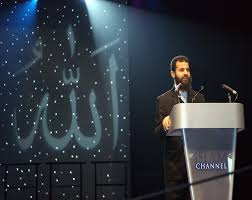
Islam Channel celebrated Eid Festival by organising Eid Gala Dinner at London Marriott Hotel, Grosvenor Square, London, on 29th June 2018. It has a compact and comprehensive programme of speeches, Nasheed and talk about Islamic Relief. The Gala Dinner was attended by CEO of Islam Channel Mr. Mohamed Ali, Lords and Ladies, Members of Parliament, Members of British Cabinet, Mayors, distinguished leaders of the Muslim community and heads of different charities.

Islam Channel Eid Gala Dinner
Among the speakers there were Helen Stephenson, CBE, CEO of Charity Commission, Sir Iqbal Sacranie, OBE, Senior Advisor of Muslim Council of Britain, The Rt. Hon. Lord Paddick, former Deputy Assistant Commissioner, Baroness Manzila Uddin, Chair, National Commission of Muslim Women, Lord Sheikh, Member of Parliament; Councillor Magid Magid, Lord Mayor of Sheffield and others. Among the Nasheed Artist, there were Awais Iqbal, Najam Sheraz, Yasir Akhter and comedian Bilal Zafar.

Helen Stephenson, CBE
The opening address was delivered by the CEO of Islam Channel, Mohamed Ali Harrath followed by Helen Stephenson, CBE, CEO of Charity Commission. CEO of Charity Commission, Helen mentioned in her speech about the contribution of the Muslim Community in Britain. She mentioned a figure of 100 million pounds collected from the month of Ramadan by the Muslim community for the helpless for the needy in the world.

Dr. Hany El-Banna
Dr. Hany El-Banna, President of the Humanitarian Forum UK, delivered a speech. In his speech, Dr. El-Banna said, “I am going to take you through a journey. I am a human. But Allah has created the whole creation to serve me and made me a custodian for all the creation of God. Before I landed on earth everybody everything on earth has been created to serve me. I am a human. Then my mother born me or deliver me on a piece of land. So I am relating myself to develop such a piece of land and to look at my nationality as a British, as a French, as a Pakistani, or Bengali or Egyptian or Palestinian or Lebanese or whatever it is and I am a believer who found his way through the teachings of the Lord, Allah  Subhanahu wa Taala; and so I have the three in one; the one who can carry the three values - the value of humanity, the value of faith and the value of my country, and  this is the Islam that I am standing for; I am a human, I am a national citizen and I am a believer at the same time.”

Talking of Muslim duty, Dr. El-Banna said, “Our duty as a Muslim is two: to develop any piece of land but Allah Almighty granted us to live on this surface. To build the community, to build peace, to build civilisation and to empower people and make them independent and establish justice on earth. This is the definition of human being who is loyal to his Lord, loyal to humanity and loyal to his country at the same time.”


Speaking about charity, Dr. El-Banna said, “Charity is not about fund raising; charity is not about PR or media or who comes first or who claim I am the first and you are the last; I am the best and you are the worst. Charity is a gin in the heart of every human being or every creation of God that Allah Subhanahu wa Taala created on this planet to those act of charitable activities. The charity work goes beyond fund raising; goes beyond PR and media and talking and inflating things. Charity work is inclusivity, one who includes the local community is members in Somalia, in India, in Pakistan in Bangladesh and in the UK as well. To include them. This is inclusivity.”

“Charity work is about transference anything comes to the charity must be declared charity work is to build a community; how to build a stronger community; how to build future of such disadvantaged, marginalised poor community not about who is first. Never claim about the first because the first responder is the local community in Kashmir, in Myanmar or whatever it is,” said Dr. El-Banna and mentioned, “Charity work is for the humanity whether they are Muslim or non-Muslim; whether they are Muslim country or non-Muslim country; whether they are in UK or outside UK; should be every human being who are in need of UK or abroad.”

Dr. El-Banna also said, “Charity work is about creating future leadership of the future generation. Charity work is about being a partner to the government who is granting us the license to work. Charity work is about the ability, bench marking and good governance work and about advocacy - this is the charity work which we wanted to every charity.”

Concluding his speech, Dr. El-Banna mentioned again, “I am a human; I am a believer and I am a partisan to my country. I love the three because this is the humanity that Allah asks me to carry in my heart.”

Sir Iqbal Sacranie, OBE
Sir Iqbal Sacranie, OBE, senior Advisor of the Muslim Council of Britain, gave a speech. Before delivering his speech he requested a bit of patience from the gathering and he was convinced that that type of patience the Muslim community during the month of Ramadan. He also told the gathering that Insha Allah the programme of this evening time up in such a manner you will have an opportunity to listen to some interesting events and of course hear some of the speeches from different charity as well.

Sir Iqbal appreciated the “the wonderful work that we have done in the month of Ramadan and have the wonderful feeling of brotherhood working together with faith or no faith and more importantly how obedient to our Creator.”

In this connection Sir Iqbal said there is something more for celebration. He mentioned, “I think it is important for us to bring the oneself of appreciation as well, those of us who are involved organising events over the years in different capacities are well aware of the difficult task putting together such an event and congratulate in the first place to CEO and the entire team of Islam Channel, Alhamdolillah, for putting such a wonderful event. So congratulate them.”

Sir Iqbal also asked the gathering to congratulate the Muslim community. He said, “We have to appreciate the Muslim community across the UK, who we heard early from the CEO of Charity Commission that she mentioned a figure of one hundred million pounds collected during the month of Ramadan by the Muslim community for the helpless for the needy in the world.”


“I understand the figure was 200 million pounds but even that the 100 million pounds Alhamdo Lillah it’s a figure with the Muslim community across the UK we need to be very proud and thankful to our Creator to give us this opportunity to contribute and to help the poor and needy around the world,” said Sir Iqbal Sacranie and added, “This contribution should not be underestimated; actually when the figure is combined to people of other faiths, no faith as well. And when we saw so much about the Muslim community solely in the very negative tone; this is one thing that perhaps requires a better understanding.”

Sir Iqbal emphasized, “So those who continued demonise castigate the Muslim community in the charity sector and through the places. I am well aware, today the day of celebration but the facts have been known. And when this is known people have become more eager there is greater incentive to help the needy people around the world.”

That the money we are talking about goes to the foreign needy around the world today there is a greater emphasis what to be done in the community in the UK as well. Organisations like zakat foundation in numerous charities in the UK and now putting an effort in the UK as well which is very essential. We should not underestimate the concern, the need of some poor people in the community as well as the wider society as well. President Dr. Hany El-Banna mentioned it is the duty and obligation of us irrespective of his faith, ethnicity wherefrom they come from.

Commission an enquiry into
Islamophobia and anti-Muslim hate crime
Sir Iqbal Sacranie wanted to conclude mentioned one particular point which has been in the media lately. He said, “It is a plea to the politicians and particularly to our government that recently the Muslim Council had urged the parties, every party, the government to commission an enquiry into the Islamophobia and anti- Muslim hate crimes now increasing and prevailing not just in the wider society but in the almost of the government and the political party as well.”

Sir Iqbal commended “Jeremy Corbyn, the leader of the Opposition Labour Party who has supported this movement that something has to be done on the same way anti-Semitism or other forms of phobias hate crimes that have been committed. We feel that the enquiry should take place.”

Sir Iqbal Sacranie enquired why he has raised this question. Because this this is the question there is so much concern in the Muslim Community. He said, “When there is so much concern in the Muslim community why does not the government interfere that this is also as important as the hate crime as it is important for us; for all of us to take it up and very clearly I say to Lord Sheikh, the former chairman or the president of the Conservative Muslim Forum who also join in the affair.”

Emphasizing on the enquiry to be taken up on the issue of Islamophobia and anti-Muslim hate crime, Sir Iqbal said, “Something need to be addressed why there is so much Islamophobia in the country. Today we have the Muslim Friends of Democracy who also feel that there is a need of this enquiry; this need of enquiry throughout the community. Therefore it is important for all of us; we need to provide full support with the form of petitions form of giving across seeking the parliamentarians and we have lots of MPs as well and we urge them this is a matter that cannot be ignored for the betterment of the community at large.”   

.


.