Tuesday, 4 December 2018

APPG on British Muslims Report on Islamophobia Defined

Launch of APPG on British Muslims Report
on Islamophobia Defined at Parliament

Dr Mozammel Haque

Let me clear first the two words on the title – Islamophobia and APPG on British Muslims. The history and background of Islamophobia goes back, of course in recent times, when the word was coined and first used in the Runnymede Trust Report 20 years ago defined Islamophobia as anti-Muslim racism. Since that time Islamophobia has passed a ‘dinner table test’ said by Baroness Warsi. The recent report also shows the rise of 52% hate crimes against the Muslim community.

The second word APPG on British Muslims is a young organisation which was founded only a year ago did some useful works to promote many aspects of Muslims in Britain and Muslim contributions in British society and Britain as a whole. This APPG on British Muslims launched its report last December 2017 entitled ‘Marry Muslim Christmas’. The APPG felt a clear need for a definition of Islamophobia and they came out with a definition of Islamophobia.


According to the APPG on British Muslims, “Islamophobia is rooted in racism and is a type of racism that targets expression of Muslimness or perceived Muslimness.”

The APPG report recommend the adoption of the abovementioned definition which was reached after following widespread consultation with academics, lawyers, local and nationally  elected officials, Muslim organisations, activists, campaigners, and local Muslim communities.

Foreword of the APPG Report
on Islamophobia Defined
In the Foreword of the All Party Parliamentary Group (APPG) on British Muslims, Anna Soubry, Conservative MP and Wes Streeting, Labour MP, the co-chairs of the APPG on British Muslims, said, “The year 2017 marked the twentieth anniversary of the seminal report of the Runnymede Trust’s Commission on British Muslims and Islamophobia, ‘Islamophobia: A Challenge for us all’. The occasion of the anniversary, and the follow up report by the Runnymede Trust last year, highlight the extent to which Islamophobia remains a palpable concern among British Muslims when it comes to inequality and discrimination. Across policy domains, from employment, education and criminal justice to housing, healthcare and hate crime, Islamophobia has a significant negative impact on the life chances and quality of life enjoyed by British Muslims.”

The Foreword also maintained, “Our impetus for conducting an inquiry into a working definition of Islamophobia/anti-Muslim hatred derived from the twin observations of seeing equality rise up the political agenda but Islamophobia remain conspicuously absent or demonstrably relegated as a subject of interest. Twenty years on from the promulgation of the term Islamophobia, we can no longer ignore or deny its impact on our British Muslim communities.”

“Let us be clear, Islamophobia is rooted in racism and its victims are not just Muslims but also those who are perceived to be Muslims. Its effects are seen in individual behaviours and institutional processes. Whether it is Muslim women who are denied job opportunities because they wear a headscarf, gurdwaras that are defaced because they are mistakenly identified as mosques, or Muslim students who fail to secure entry offers from Russell Group universities, the effects of Islamophobia are real and measurable,” the Foreword mentioned.

APPG Report in its Foreword also said, “In pursuing this inquiry to arrive   a working definition, we have attempted to engage the ‘process of defining’ through widespread consultation with parliamentarians, experts, lawyers, community activists and victim-led organisations so that we could confidently propose a working definition which serves to give meaning to the word and nature of the thing we call Islamophobia.”

Launch of the APPG Report on
Islamophobia Defined
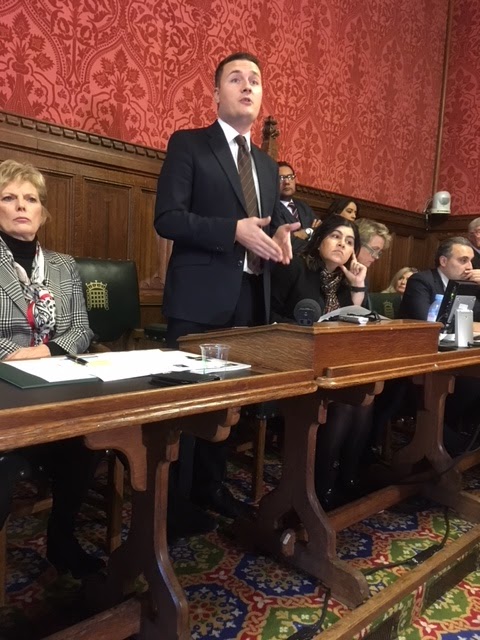
On behalf of the All Party Parliamentary Group (APPG) on British Muslims, Labour MP, Wes Streeting, co-chair of the APPG on British Muslims launched the report on Islamophobia Defined at the British Parliament on Tuesday, the 27th of November, 2018. Followings are the proceedings of the launch of the Report on Islamophobia Defined.

Wes Streeting Labour MP
While giving an introduction and background to the report, Labour MP Wes Streeting, the Co-chair of the APPG on British Muslims, said, “I am proud to co-chair the APPG on British Muslims with my Conservative colleague Anna Soubry actually conceived from the cross-party consultations from both the House of Commons and the House of Lords. This is an issue of enormous importance. This can be seen from the turn up in this windy afternoon. This is also an enormous topic of concern and interest to Muslim community across the country and the people who care about tackling prejudice and discrimination in all of its forms.”

“APPG on British Muslims is a relatively young APPG. We are now going for a year. We sorted two things really; one is to promote so many aspects of Muslims in British and the Muslim contributions in a making in our country as a whole. Around this time last year our first report Marry Muslim Christmas which highlighted the amazing works of the Muslim community’s social organisations are doing, particularly doing at the festive times of the year,” parliamentarian Wes said.

He also mentioned in his opening introduction, “We have to immediately turn to Islamophobia the real problem and the negative aspects of life in Britain. There are plenty of evidence research already out there about the hate crime attacks on Muslims, verbal attacks, the physical attacks on people who are non-Muslims perceived to be Muslims; the attacks on Muslim institutions whether mosque or community centres. So we knew this is the problem that happens to be tackled.”

“Whenever any of us talk about Islamophobia in the Parliament immediately we see reactions of denouncing dismissals legitimisation of Muslim people,” mentioned Wes.

He said, “So we set out defined what islamophobia was. We started Islamophobia was an anti-Muslim hatred. We decided the best job we could do is to put together all of that existing research already out there and my goodness there is a rich body of research out there already. We engaged with a huge number of academic enormously generous their time and expertise in this area.”

Wes also informed how the APPG worked with Muslim community organisations, public sector bodies, public service providers and cross section of Muslim communities. He said, “We also engaged with Muslim community organisations nationally and locally; we engaged with public sector bodies; public service providers and most importantly far-reaching cross section of Muslim communities; PGGI Muslim communities across the country to go and test some of our thinking and assumptions with people. Because the best way to a kind of reaching to an authoritative definition we ask people themselves of their own lifetime experiences; what they wanted to see in the Report in term of definition of Islamophobia.”
Parliamentarian Wes also mentioned the findings are very conclusive. He said, “I think the findings you will see from the report presentation today are very conclusive. There was a very clear need for a definition of Islamophobia and you will see the use by the Muslims community across the country if Islamophobia, that’s the term, the most widely used. It’s a problem, its shortcoming. We found when we were asking people what the term you would most likely to see you use one of the vast majority of people set forward.”

Definition of Islamophobia
Wes also maintained, “So we adopted in our report and in defining Islamophobia I think we sought to do two things; one is to establish beyond any doubt and I quote now from the definition, ‘Islamophobia is rooted in racism and it is a type of racism the targets the expression Muslimness or perceived Muslimness. And I think that’s really important firstly to make clear beyond anyone doubt what we have seen in terms of Muslim experience of Islamophobia is racialization of Muslims as a group and expression of Muslimness not just attacks on people but attacks also on buildings and there is no doubt in some of the evidences we looked at experiences we heard from academics and quantitative research or Muslim community themselves what people are experiences is a form of racism. That is abundantly clear definition we had from the Sikh representative organisations. They described their experiences of Islamophobia.”

“We are very clear of protecting people from prejudice; protecting people from discrimination; try to improve the quality of life  and the opportunities for Muslim communities life across the country. We hope with this report, this is just the start of the process because in order to tackle racism and prejudices of any kind; he must be able firstly properly to define and understand and most importantly we got to accept the principle that is the victims of discrimination ought to be able to define their experiences about prejudices for themselves. How that experience properly understood by legislature, by policy makers, by employers, or by people of any position of power and authority. And I hope that definition will help people to do that,” mentioned Labour MP Wes.

“The second thing we want to achieve today is not just to get your support of the definition or to sign up up for what will be a big campaign.,” the co-chair of the APPG on British Muslims, Wes, said and added, “I actually want this to be a court of action for far too long real acts of violence and discrimination against Muslims have gone unchallenged unchecked and sometimes un-prioritise by people in position of power. Too often people working this building have abused their authority and their position using languages about Muslim people, particularly Muslim women that will never be accepted against any other group in our society. That has to be stopped too.”

Co-chair of the APPG on British Muslims Wes also informed that they met Home Secretary, Shadow Home Secretary and chair of the Home Affairs Select Committee. He said, “So this document defines Islamophobia as a court of action to tackle Islamophobia. We want to see the government adopts this; we met Home Secretary this afternoon, Shadow Home Secretary, chair of the Home Affairs Select Committee. So we want to see the government adopt this; we also want everyone whatever their position or authority really take this what can I do to tackle prejudice against Muslims.”

“There might be an HR director going back and look at practice;  Are we sure we got it right; people applying for jobs here,  Muslims have a fair practice at the opening; are we sure people progression in their pay is it fair or are we may be inadvertently discriminating against Muslim people. We want people walking down the busy street like Oxford Street when they see women like my constituent, were attacking on broad daylight during rush hour and in a state of distress,” said parliamentarian Wes and added, “Each of us can live a decent and meaningful life. That’s, for this report, is all about.”      

Chair, Home Affairs Select Committee
Yvette Cooper, MP
After thanking the chair and members of the APPG on British Muslims, Yvette Cooper, MP, the chair of the Home Affairs Select Committee, said, “To give you my commitment that the Home Affairs Select Committee is keen to take this forward. We have shortly will be completing our enquiry into hate crime and publishing; we would be tackling the toxic hate crime and levels of racially motivated, religiously motivated and other kinds of hate crime across the country But we are also conducting a parallel inquiry into Islamophobia which was started by suggestions are sharp now with Naz (Shah) is also on the Committee and part of the work already done take evidence around Islamophobia in the media. We are taken evidence of Sayeeda (Warsi) and also look at Islamophobia online and the escalation online hatred; we know the impact that can happen offline as well. And we think throughout the work even this initial work by actually how charging it was with the lack of widely accepted definition of Islamophobia.”

“That’s why I think this work is so important by the APPG; this is not just about a word but actually we know the word is incredibly powerful and therefore round the definition what then helps you to be able to take actions; to be able to challenge prejudice, to be able to challenge discrimination; to be able to challenge the kind of hatred and to be able to challenge to kind of divisive society but also with you too often to silence British Muslims,” said chair of Home Affairs Select Committee and added, “We know that the Muslim women face the experience of worst hate crime and the worst divisive prejudice as well. So very best of luck with the rest of the events this afternoon and with the commitment that I know you people will be making how we take this forward and we look forward to be able to take evidence from all of those involved in this piece of work and also to be able to do our bit to take it forward and to challenge the appalling prejudice and divisiveness across the country.”

Omar Khan – CEO Runnymede Trust
While welcoming the APPG Report on Islamophobia and its definition, The Chief Executive Officer (CEO) of Runnymede Trust said, “For taking so seriously, for engaging not just academics but by British Muslims and the wider community, I am really proud of what you have done and finally I do welcome this report and its definition and I think it follows from Runnymede definition established in our 20th anniversary report which is to define Islamophobia as anti-Muslim racism. We think it is really important to focus on racism, not just as a question of analysis of definitions, but as mentioned my previous speaker has suggested ensuring that our civil society and policy response tackle all the ways which British Muslims are disadvantaged and discriminated against.”

Omar Khan mentioned, “There is a challenge here which is not to deny that hate crime is indeed a terrible experience for many years to many British Muslims around the country but at the same time we need recognise that hate crime is the only way in which British Muslims are disadvantaged and discriminated. We hold the secretariat of the APPG on racial community a few years ago; we did inquiry into black and Muslim women in the labour market and we had multiple people coming forward talking about changing their names; taking off their headscarves in order to sit in an interview and we know we have to send many CVs of Asian and African sounding surnames that means the Muslim sounding surname just to get an interview. The same people could not enter the door because of the surname; do your sons will go to treat you fairly once you go through the door or things like progression promotion and pay rise. “

 “I think we need to recognise this definition does that the discrimination of British Muslims experience is just one off the street a member of the EDL as Sayeeda Warsi is called ‘dinner table Islamophobia,’” said Omar Khan and added, “The final thing I say as the Director of an organisation not only 20 or 21 years ago first published a Report on Islamophobia but racism on its all forms. The other event of defining which is again a challenge we need to navigate Islamophobia and racism; it connects to other form of discrimination and racism; it allows us to understand that all forms of discrimination are at the same time they have the  distinctive property.”

CEO of Runnymede Trust, Omar Khan, said, “So yes Islamophobia does look different from anti-Semitism which looks different from anti-black racism or Afro-phobia. But all of them are forms of racism and are not only that useful analytical point; it is a useful point for policy makers to think about all the different communities that experience racism and indeed all of us are fighting it. If you are opposed to one form of racism you should be opposed all forms.”

He also said, “One last word I do think the free speech point Wes (Streeting) has mentioned easily is a challenging one. The way we put in our Report criticism of ideas is a hallmark of free society but discriminating against people is a sign of an unjust one and I think that’s the distinction we have to keep in mind and Muslims do need to accept that there would be criticism, sometimes tough criticism of Islam but I think people who make those criticism also need to anticipate that some of those critics wade into attacks on Muslim themselves as people. So we need to keep distinction clear but at the same time many people criticise Israel are not motivated by anti-Semitism; so many of those who do criticise Israel actually are not anti-Semitism. Similarly most of those who criticise Islam, may be, are motivated by Islamophobia, but too many of those who do are actions motivated by denying the rights and equal opportunities of British Muslims where this report needs to move forward too. And I welcome today and I look forward to working with the group together too.”

Ed Davey, MP
Liberal Democrat Home Affairs spokesperson
Thanking the APPG, Ed Davey MP, the Liberal Democrat Home Affairs spokesperson said, “I think this is the incredibly important piece of work; important because it is absolutely needed because of the single sense I think the way the APPG has got about it thoughtful evidence based way bought this subject does.”

He also mentioned an incident of mosque attack and said, “When the mosque was attacked by English far right, everyone came behind the community cohesion with depth and emotion.”

Supporting the work of the APPG, Liberal Democrat Home Affairs spokesperson said, “For a moment in the history of our country where we need to re-establish commitment by everybody in our community making sure that the politics is welcoming particularly welcome to everyone in our community.”

“You certainly have my personal support right for this cross-party report. I have read some of your proceedings,” supporting the report Liberal Democrat Home Affairs spokesperson said, “Less be clear this is the foundation.”

“There is an existing sense of division; now we have got to heal that; we have got to use many ways of healing it; be clear of  Islamophobia,” said Ed Davey MP.

Speaking about Islamophobia and Media, Liberal Democrats Home Affairs spokesperson, Davey, MP, mentioned, “I see Islamophobia everywhere in the front pages of a number of our newspapers.”

Naz Shah, MP
Describing this day the historic day, a part of history day, Labour Parliamentarian Naz Shah said, “As a Member of Parliament with a large Muslim constituents like the MP in Parliament,  you know to have this kind of piece of words that we have here is for me very historical. And what we are sharing with is historical today and I think we need to really as much has everybody has said what this definition means; you are playing a part in history, from 20 years ago since from that coined Islamophobia to that day Islamophobia has passed a dinner table test; this is version three where I sit; Islamophobia defined.”

Labour MP Naz Shah also mentioned, “My message to those critic is this; this is something that the community defined. I went out there talk to that community; I am representing that community and I am still the member who represents that community. We go out and work wherever it is, Ilford, Sheffield, that being Birmingham wherever we being wishes come from the community. Those who are quick to judge this definition today they really need to check a hard look at themselves and who is it that they represent because certainly it is not the constituency I represent; the Muslims that spoke to whoever behaviour that abuse that we talked about today.”

Parliamentarian Naz Shah also mentioned, “For me; this subject is so close to me; because I want my daughter if she decides to wear the hijab to be able to wear that hijab. I want my son if he wants to grow a beard when he is older to be able to grow a beard.”

Referring to the gathering that turn up in a windy afternoon to attend and participate on the launching of the Report, Labour MP Naz Shah said, “You are part of our journey and this journey is for every Muslim of UK and beyond.”

Rt. Hon. Dianne Abbot  MP
Shadow Home Secretary
Rt. Hon. Dianne Abbot, MP, Shadow Home Secretary said, “I did want to come and show my support to the important work the APPG is doing. I do not want to say this; I have literally spent political lifetime fighting Racism, anti-Semitism, Islamophobia all this through. It was necessarily fashionable to fight though; but I think you could almost argue that Islamophobia is the most intense form of racism we see today and Baroness Warsi have talked about a kind of dinner party Islamophobia where people almost casually can exchange Islamophobic remarks on dinner; people who would not make other types of racism remarks. Think of a day of type of liberalism they can be hostile to our Muslim community

Referring to Brexit and rise of hate speech, Shadow Home Secretary Dianne Abbot mentioned, “So in a difficult time with Brexit as a rise in hate speech and hate activity; it has never been more important to support minority community and particularly our Muslim community.”

Dianne Abbot, Labour MP said, “I believe the APPG is doing very important work I think the work on a definition that is important.”

Shadow Home Secretary Dianne Abbot mentioned, “Actually we are strongest society all together when we fight racism Islamophobia anti-Semitism. We are stronger; stronger society; stronger community and stronger nation. We all know; I certainly know what the Muslim community has contributed; what the Muslim community continues to contribute in this country and it is so important both in foreign policy and domestic policy to fight Islamophobia in whatever party it raises its heads because exactly it is freighting and it makes us all much weaker.”

Lord Bourne (Minister for Faith)
Thanking Baroness Warsi and Anna Soubry for all the works that have been done on this Report, Lord Bourne, Minister for Faith, said, “It is almost thoroughly researched report I have not chance to go through all of it but it is very persuasive good stuff there and we should cover very basic points, first of all, any hate crime, any discrimination against any body in our country is hate crime against all of us; discrimination against all of us that runs through the report and I think that is an important thing.”

His second point is in relation to Islamophobia. Lord Bourne mentioned about the hate crime figures rise. He said, “52% rise in hate crimes often against people who have been identified as Muslims. It is not just Sikhs and Hindus; sometimes the Sikhs have frozen the whole thing that’s why we need to tackle it.”

Appreciating and praising the fantastic work done by (Akeela) Ahmad and her organisation anti-Muslim Hatred Working Group, Lord Bourne said, “She I know and other members of that group are very keen to do work based on what you have done using should look at the definition. The government just as we have heard Sajid Javid very much signed up to my boss very keen to do so. We want to do it; we want to do it properly but it is something that we need to do.”

Lord Bourne concluded by saying, “We are very keen to take it forward but just once again you know I think we are all united on this; we need to be united but thank you very much for being there; thank you very much for the work that you have done.”

Baroness Sayeeda Warsi
While delivering her closing remarks, Baroness Sayeeda Warsi paid tribute to Lord Nicolas Bourne, this Minister for Faith is phenomenal. She said, “I praise people like the way he engages with all the things across the country; the time he takes out to go see them; the time he takes out to understand; the brave way to conduct the conversation; the sincerity with the open minded issues; is really phenomenal. Also the long long way you continue in that room with many bigger roles that I can look forward to working with you.”

Referring to the report on Islamophobia defined, Baroness Warsi mentioned, “This work has been hard; it has been tough; it has been tough to ask the questions that we needed to ask; we all started out with very different positions; I published a book a year and half ago in which I said the term I preferred anti-Muslim prejudice, anti-Muslim sentiment, so here I was as part of an inquiry mentally in a different place where many of my other colleagues were and what we felt was really important.”

“We wanted to follow the evidence and the only way we could do that by making sure that we heard from the academic as broadest as possible; engaged them as deeply as possible and analysis that we work with people we are being working at the top of this work as well as the grass-roots communities is that we buy and challenge communities themselves; and some of that were tough;” said Baroness Warsi and added, “but the challenge we had was to make sure that we talked to as many Muslims as possible.”

“What we felt this is a  parliamentary group that had to be led by the evidence of academic work that we heard, said Baroness Warsi and mentioned, “When we finished, one thing what we had learnt last twelve months, that the debacle within the Labour Party and the adoption the definition of anti-Semitism; it is this. It’s not a great look when you start telling communities by the fact that they are facing the onslaught this should not be the way they wanted that we know what they are feeling.”

Baroness Warsi said, “I sincerely hope that we can learn the lesson within the Conservative Party of what Labour went through;  and not say thanks for the definition we will have our own version thank you.”

While concluding her closing remarks, Baroness Warsi said, “I want to say two things really in conclusion. There is one thing that is fundamentally important to me when we started writing this report that was about making it very clear that this report was and should not be about sitting down  debate; especially sitting down debate on practicals which have sadly in the media.”

Baroness Warsi also mentioned, “This is not about Islam; it is about people; actually it is not about Muslim, it is people who are either showing of expression of Muslimness or perceived Muslimness. People powerful testimonies were from visibly Muslim women I should likely to face Islamophobia. Sikhs, the people who are perceived to be Muslims; and converts, families of converts, white people who marry Muslim a non-convert were seen as traitors to Britain; so many of these people who are even Muslim were facing this discrimination; were facing Islamophobia on the basis of racialising a community and that’s why Anna (Soubry) actually has insisted on having the word despite supervision by our academic that this is rooted in racism; not just  a formal racism; it was rooted in racism and target expressions.”

Besides the above Members of the Parliament, there were other MPs, such as Afzal Khan MP, Elanor Smith MP, Tan Dhesi MP spoke during the Launch of the report. Chair of Government’s Anti-Muslim Hatred Working Group, Akeela Ahmed, MBE, also spoke.

After that there was a Questions & Answers (Q & A) session, when support came for the APPG Report on Islamophobia Defined and comments made from the floor.


Tuesday, 27 November 2018

Prophet Muhammad (pbuh) - Mercy for All Creatures

·                       
Prophet Muhammad (Pbuh) –
Mercy For All  Creatures


Four years after the death of Justinian (A.C. 569), a Great Man, preaching a great religion, Islam, was born at Makkah, in Arabia, which was in dense darkness of social dissolution and spiritual despair.

The famous writer, H.O. Armstrong, in his book Lord of Arabia, writes about the situation of Arabia and its people of that time thus: "Arabia remained isolated and unknown, for it was a brutal country and inhospitable, a land of cruelty and violence and its inhabitants, Arabs, were as brutal and cruel as their land. Both villagers and Beduins lived hard and dangerously.

They were pagans and savages, unclean, poverty-stricken, debased in their habits, idolators with cruel and brutal beliefs. They were bestial in sex, untamed and untamable; they were split up into small tribes which were continuously at war with each other and were savagely intolerant of any stranger or of any innovation".


Holy Prophet Muhammad (peace be upon him) was sent by Allah Almighty as a blessing to Mankind. Allah says in the Quran: “And We sent you (O Muhammad) not, but as a mercy for all creatures". (21:107) Islam united the Arabs, purified them and bound them into one people.

The Prophet filled them with a great faith. The historian Gibbon has truly discovered, “Through Islam, Muhammad banished from the Arab within ten years their hard-heartedness, spirit of revenge, anarchy, female infanticide degradation, rivalry, lawlessness, usury, drunkenness, infanticide, murderous quarrel and human sacrifice as well as stupid superstitions and fetishes". Within ten years he controlled All Arabia. He had created a new civilisation to the world - a civilization which is not only rich in science but also contributed towards the moral, spiritual and human development.

Unlike other great religious teachers, there are no mythical elements surrounding him. Holy Prophet Muhammad (pbuh) is a historic man and his life was led in times that are regarded as historical. In the seventh century of the Christian era this man was born and lived out his life in lands the history of which is known. The Holy Prophet created a society more free from widespread cruelty and social oppression than any society had ever been in the world before. “Let it be fully understood that Islam protects all, whether a man be Muslim, Christian or anything else and persecution is forbidden in any shape or form. Complete toleration was the gift of Islam to the world and it is gradually permeating the strata of narrowness and hatred”, writes Dr Sheldrake about Islam and its founder.

The religion of Islam proclaimed the first real democracy ever conceived in the minds of men. Islam is essentially a religion which propagated democracy and social equality. All the believers are equal and this fundamental equality is not a fiction as is so common among Christianity. It is accepted and real. The Hungarian Professor Dr Germanus, a great scholar, writes, “It is the people who are addressed in the Quran and it is for the benefit of the people and their salvation that all the injunctions of the rituals and beliefs are imposed on the believers. It is not a class privilege by descent or esoteric love which can rule over the oppressed and cowed en masse, but every individual man and woman stand directly before God in worship, duty and right”.


Islam imposes no restrictions on any individual enterprise towards amelioration of his status while it regulates the duties and rights towards his fellowmen. The respect and observance of Islamic social laws are a safety-valve against disruptive theories. These teachings are pillars of every sound society. They condemn selfish exploitation of the helpless and severely punish theft and robbery. No slogans or hatred but serious work and self-discipline all represented by the Sunnah of the Holy Prophet will pave the way towards the renaissance of the Islamic people.

No other society has such a record of success in uniting in an equality of status, of opportunity and of endeavour, so many and so various races of mankind. Islam has been more successful in mitigating race prejudice than other universal creeds. There is absolutely no colour bar for marriage. Islam has never known class-struggle and social hatred. It has banned human hatred and opened the way for human brotherhood and equality, whereas the western civilisation is still unable to look beyond narrow horizons of racial and national antagonism.

When shall the modern nations place love of man above love of the world? There can be no democracy without love of man as a man. This democracy is the very essence of Islam. That faith makes Islam a Brotherhood, an International Brotherhood, a fellowship of many races and tribes.

One of the commonest sneers at Islam in the West is that it teaches that women have no souls. Servicer remarks, "Muhammad sought to make himself the champion of women whose position he tried to ameliorate. Before his reform women and children could not inherit what was worse, the nearest relation of the deceased took possession of the women and their property in the same way as he took over his slaves with their savings.


Muhammad gave the women the right to inherit; and often insisted in their favour. His last sermon at Makkah contained these memorable words: Treat your women well, they are your helpers. He well knew that if a woman is a slave by day, by night, she is a queen and her influence is at all times worthy of consideration".

Because of its democratic nature, freedom, equality, toleration and justice, Islam spread throughout the whole world. The expansion of Islam is the most miraculous of all miracles. Being inspired by the light of Islam, the medieval Arabs conquered most of the then civilised world in less than a century, whereas the Roman Empire of Augustus was won over a period of 700 years.

"Within a century after their rise these people became the masters of an empire extending from the shores of the Atlantic Ocean to the confines of China, an empire greater than that of Rome at its Zenith", wrote Philip K. Hitti in his well-known book History of the Arabs. Islam has been and still is a living force from Morocco to Indonesia and a way of life to more than a billion of the human race.


Holy Prophet Muhammad established a civilisation wherein there was peace, harmony and co-operation. Arrogance, haughtiness and conceit were hated. Modesty, humbleness and simplicity were praised and appreciated. All forms of extremism, violence and aggression were prohibited. Islam is a message of peace and stands for freedom and equality which, as a matter of fact, had long been forgotten in all the lands of the degenerated ancient civilisations.


The people throughout the world welcomed this religion because of its message of peace. Finday in his book History of the Roman Empire, writes, "The inhabitants of Syria welcomed the followers of Muhammad; the Copts of Egypt contributed the place their country under the domination of the Arabs".

Islam establishes a brotherhood among all Muslims. It is a religion of peace and toleration. The dominant feature of Islam, as its very name implies, is the making of peace. A Muslim is one who has made peace with God and man; peace with God implies complete submission to His Will and obedience to the laws of creation. Peace with mankind implies the doing of good to one's fellow creatures.

The Holy Prophet of Islam was a very great man. His honesty and probity as a poor young man earned him the social title of Al-Amin: the Just. His immense contribution to civilisation remains an outstanding and astounding fact of history.

Howsoever we may judge, the character of this man is a precious heritage for Humanism. He was always very abstemious in his habits and contented himself with simple food, clothes and lodging. He was entirely free from avarice. The Holy Prophet was an exemplar of patience and forbearance to the proud hot tempered Arab. His sweet patience was indeed his great virtue. His boundless charity and generosity to all flowed from his unworldly heart like a fountain in the Arabian desert.

Bernard Shaw wrote in his book the Genius of Islam, "He (Muhammad) is a Saviour of Humanity". Shaw asserts in the same book and says, "I believe that if a man like him to assume the dictatorship of the modern world, he would succeed in solving its problems in a way that would bring it the much needed peace and happiness." Bernard Shaw has truly acknowledged, "Muhammad was a saviour of Humanity, the Mercy for all men, a blessing for men and an exemplar in every age."

We must send blessings to Holy Prophet Muhammad (pbuh) as the Qur’an says, "Allah and His Angels send blessings on the Holy Prophet: O you who believe! Send your blessings on him, and salute him with all respect". (33:56).

* First published in Muslim World, the English Weekly of Rabita al-Alam al-Islami on 8th of April, 2006


Monday, 19 November 2018

Interfaith Week at British Parliament

Interfaith Week at the British Parliament
Faith in Politics

Dr. Mozammel Haque

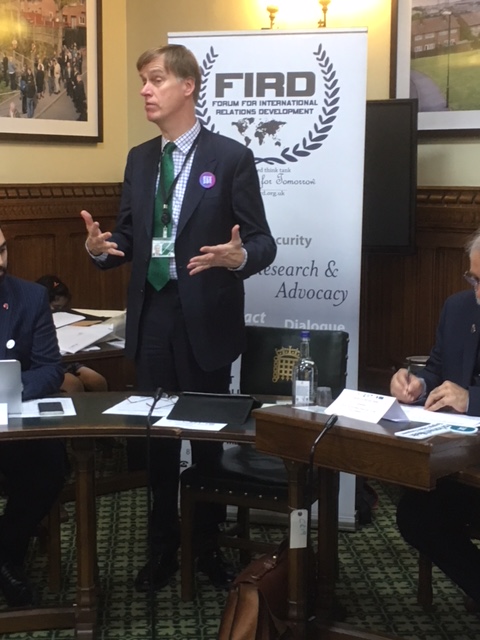
The Forum for International Relations Development (FIRD) has organised an event at the Houses of Parliament on Tuesday, the 13th of November 2018 to celebrate UK Parliament Week and Interfaith Week. “Faith is a great starting point for politics – perhaps the best starting point there is. Because religious faith is the source of the values we need to make politics work: responsibility, solidarity, patience, persistence, compassion, truthfulness. The erosion of these values has led to an erosion of trust in politics. To rebuild trust in politics, as we must, we need to rebuild those values – and religious faith is a very promising source from which to do so,” said Rt. Hon. Stephen Timms, Member of Parliament representing the diverse community in the East End of London and also the chair of the All Party Parliamentary Group for Faith and Society

Rt. Hon. Stephen Timms particularly extended his thanks to  Umar Mahmood from the Forum for International Relations Development for putting together the programme for today’s event by managing to bring the following illustrious panel which included Dr. Harriet Crabtree OBE, Executive Director, The Inter Faith Network;  Afzal Khan CBE MP, Shadow Minister (Home Office) (Immigration); David Clark – Head of Education and Engagement, UK Parliament; Dr. Rosena Allin-Khan MP – Shadow Minister (DCMS) (Sport) and Jehangir Malik, CEO Muslim Aid.

I had the opportunity to be present at the event on behalf of Dr. Ahmad al-Dubayan, the Director General of the Islamic Cultural Centre & London Central Mosque, as one of his Advisors. I listened carefully and attentively and found Mr. Stephen Timms noticed after a lot of discussions with faith groups that they did not have a very good relationship with their Local Authority and came out with a Covenant.

Parliamentarian Timms said, “We drew up something we call the Covenant for Engagement. Eleven local authorities have adopted it. It hopes to be a vehicle for building trust between faith groups on the one hand and local authorities on the other. I’m hoping that model will be adopted across the country as increasingly Councils recognise the value and the potential that faith groups can make.”

At the beginning of his speech, Stephen Timms mentioned, “I represent a very diverse community in the East End of London. People who are not familiar with communities like the one I represent assume it must be fragmented. But this morning I met a young civil servant who has just moved in to our community who was commenting on how cohesive she is finding our community to be.”

Parliamentarian Timms mentioned, “I think the way it works is that almost everyone in our community belongs to a faith group; and, as long as each of them is clearly part of our wider community, belonging to one of them extends to a sense of belonging to our community. Fragmentation doesn’t happen because people all belong to lots of different things. Fragmentation happens when lots of people doing belong to anything at all.”

“It is often said that “you shouldn’t mix faith and politics”. Those who say it point to trouble in any number of parts of the world to explain their argument. And you can see what they mean,” said Rt. Hon. Timms and added, “But I think they are drawing the wrong conclusion. The truth is that faith is a great starting point for politics – perhaps the best starting point there is. Because religious faith is the source of the values we need to make politics work: responsibility, solidarity, patience, persistence, compassion, truthfulness. The erosion of these values has led to an erosion of trust in politics. To rebuild trust in politics, as we must, we need to rebuild those values – and religious faith is a very promising source from which to do so.” 

Speaking about Britain and Faith communities, Stephen Timms, who is chair of the All Party Parliamentary Group for Faith and Society, mentioned, “Britain tends to think of itself as a pretty secular country these days. And yet it has turned out, at the beginning of the 21st century that it has been faith groups which have uniquely been able to take on the sudden challenges of inequality of poverty which we have seen in recent years.”

Citing an example, Mr. Timms draw the attention to the food poverty and said, “Let’s look at food poverty. It is perhaps not surprising that faith groups have had the motivations to run food banks. More striking is that they have also had the capacity – when no other network or institution has been able to. It has been a remarkable achievement, illustrating an important truth about where the capacity to change things for the better in Britain today can really be found.”
.
As a chair of the All-Party Parliamentary Group for Faith and Society, Mr. Timms mentioned that he has got the chance to look into the relationships between the Local Authority and Faith Groups. “We have looked closely in recent years at the relationships between Local Authorities and faith groups in their area. We would like to see a lot more examples of Local Authorities commissioning services from faith based organisations who are wanting to provide services,” said Mr. Timms and mentioned, “As part of our work, we have had a lot of discussions with faith groups – on a variety of topics, such welfare to work, children and young people, about oversees development. A very common theme of those discussions was faith groups feeling they didn’t have a very good relationship with their Local Authority.”

Parliamentarian Timms said, “The Councils were suspicious of them, there was a fear that if they did give money to a faith based organisation to provide a service, then either that money be used to convert people instead of delivering the service, or the service would be delivered in a way that was biased and only for that particular group. But local authorities have a lot of anxiety and nervous about all this. And that is what our covenant is aiming to address.”

Parliamentarian Timms talked about a Covenant which is aiming to address the issues presently facing. He mentioned, “So we drew up something we call the Covenant for Engagement. Eleven local authorities have adopted it. It hopes to be a vehicle for building trust between faith groups on the one hand and local authorities on the other. I’m hoping that model will be adopted across the country as increasingly councils recognise the value and the potential that faith groups can make. I imagine many of us sitting in this room recognise this potential. Let’s hope others do too! I hope the discussion today will give this collaboration a new impetus and energy for the future.”

Lord Tyler CBE
Lord Tyler said, “I have been associated for a number of years with faith and civil society. The works that I have been doing at various educational levels is to improve religious literacy. I think in this country now we have two generations possibly we have not the benefit of understanding and getting to know different faith groups as they believing and what its important what is significant in their lives. And that affects the whole education system. So there is a big lack of understanding for quite a long time.”

Referring to Stephen Timms’s food banks, Lord Tyler said,  “It is interesting as Stephen said it happened at the same time very important initiative have been taken by those faith groups and I am associated with the trust as they were the partners who run and managed and looked after the majority of our food banks. And my wife is a trustee of that local food banks. This combination of trying to increase the understanding of what faith groups are facing and at the same time the challenges to try to make a larger contribution to the local communities. I think it is a very important double aim; it is moving in the same direction I think we can do is to improve the speed the important development phases is important too.”

Lord Alderdice
Lord AIderdice said, “The problem of faith and politics was for a long time implied to be a cause of the Protestants and the Catholics fighting because they came from religious backgrounds. And the view many of them took in the 1970s and 1980s when I was beginning my own works was resolution of problem only when people only moved away from their commitment of their religious faiths.”

“When I became involved coming from a faith background and commitment I took the view that we needed to understand that what faith is all about. I did not believe that the IRA was fighting to protect doctrinal Francis; it was not at all and then it was interesting because as people of faith became involved in working resolution like things begun to make much progress,” said Lord Alderdice and added, “Many of the people involved were of the view that after two/three generations of education religious faiths will effectively be disappeared. No one can look at the world now and say that is the case.”

Lord Alderdice said, “I think there is really fascinating and exciting challenge for us but it is a challenge. This year we are celebrating really an important anniversary of the Universal Declaration of Human Rights. But in 2018 Article 18 of Freedom of Religion and Belief is an orphaned article about which nothing being done by the United Nations on that front. This is something which we can pick up and promote and indeed I am very happy to say that the British government begun to think of some funding in the question of freedom of religion and belief. I think this is a big recognition that we can talk seriously about Universal Declaration of Human Rights; without talking energetically about the freedom of religion and belief. And that includes those who do not have religious belief of course.”

Lord Alderdice mentioned, “I think it is not so much different religious faiths  all the way people hold their faith and those who hold it in a fundamentalist way of thinking was very often do contribute to fragmentation; but those who understand the importance of diversity I have a totally different perspective very much the one that Stephen mentions that understanding the different routes to faith that may help us to bring a richer community because of its diversity rather than a divided community because of our differences; but if we are going to achieve that I think there is an important change for the faith community is to be looking forward to what venturing faith it means rather than simply trying to maintain the practices and  the rituals and the ways of working from the past for their own sake.”

“Every generation has the possibility of seeing in a different new way and if they are creative or energetic and visionary they can take things forward,” said Lord Alderdice.

Lord Alderdice also mentioned, “It’s a sad reality of the human conditions however every new idea and new venture is taken up by the second generation and consolidated but the time it comes to the third generation it becomes bureaucratised, institutionalised, legalised regulations all over the place and anybody that comes forward with the movement with the spirit whatever that means to them is really a heretic and problem. So every now and then again we have actually to become a bit heretical.”

Lord Alderdice said, “I do see a very important difference between belief and faith. Belief is in a sense the things we feel sure of that we knew; faith is a venturing into the uncertainty with commitment and trust but nevertheless it is a venturing out of our little bar into the uncertainty of the wider zone there.”

Dr. Rosena Allin-Khan MP Tooting
Dr. Rosena Allin-Khan, Member of Parliament from the Tooting Constituency said, “I think if you are the embodiment of some one in faith probably it makes me; the Pakistani father, a Polish mother, living in Tooting I think that sounds very much of everything. I am a practising Muslim went to a Church of England school; I go around collecting prayers wherever I can get them; whether it is a Church, Mosque, or Synagogue and my family in Poland stood alongside their Jewish friends and colleagues to fight against the Germans and I have devoted my life to pursue the interfaith works.”

Dr. Allin-Khan mentioned, “I believe actually fundamentally we are all the same; we are all children of God; whichever house you choose to go and worship; oh no, worship; whether you call it worship, soul, spirit; whatever; we are all here together to call habit for a divine purpose. And I think we need to be very honest as politician. I have been MP only for two years now. I spent my life working as a doctor. I am an emergency medicine physician and I still practice and I work in the field of humanitarian aid. And I have seen those come in all forms, sect, society and religion and that comes in all forms of sect, society and religion and our role as people are to find those like-minded individual and stand shoulder to shoulder with them whichever colour, religion and denomination they are or belong to. Politicians are really important though to embrace the part the faith may play in your life and sometimes you get cut down for doing so.”

Talking about her family and children, Dr. Allin-Khan said, “My children, I have children three years old and five years old; they are Polish Pakistani Welsh being raised as Muslim; oh she drug her husband down the mosque, made him to take the Shahadah, forced him to be a Muslim; who would choose that. Yes; my three daughters are Muslim; new flash; that’s the world we live in and in fact that is the majority these days; the majority of our country are mixed heritage. My daughters and I other people they share because they are wearing scarf; what I love her school I choose to have educated in a non-denominational school. It is very important that children learn from one another, I really believe that.”

Dr. Rosena Khan talked about herself and her belief and faith and profession. She said, “My mum says me there are people harder than us; that makes me think if there is God up there and I belief there is I am sure HE means me to improve the life of people harder than me. And I took that mission throughout my life with me and everyday my prayer was I don’t really care what the far right say about me; I always say everyday God whatever You mean me have; Whatever way you used let it be and when HE took me this poor simple girl going for medical school in Cambridge.”

Dr. Rosena Khan works in Hospital as a Doctor with her faith. She said, “Okay shock around the world; when someone came to my A & E department in Hospital with a break up morning trying to have a heart attack and I stand up around the bed; God, you mean this person to live; work for me. Every time I sat at the chamber and I had a message to deliver I think to improve the lives of everybody. I say; God, if you need me immediately without mumbling jumbling; immediately placed the attention to the matter IF it is important in the community I would be doing my job; if I take everything on my job; that does not mean everybody has to; that does not mean I don’t judge people.”

Dr. Rosena Khan also said, “I don’t but I mean I am learning; I am on a journey where I am learning to embrace; her faith affects my politics and my job and the best thing we can do in our community if the unsung putting you whether you are a public figure or being a politician or otherwise it comes risky safe; I am a Christian and I have Christian values; that means someone will love you; I am a Muslim and I am proud; because someone will call you fundamentalist.”

Dr. Khan has very beautifully explained and defined the word ‘Fundamentalist’. She said, “I tell you what, a fundamentalist Muslim by very definition is somebody who believe in peace; who believe in unity; he does not support division; guide who fundamentalist says; fundamentalist Christian will say the same things; fundamentalist Catholic will say the same; as my Stephen colleague just said people who hold such a hard thought they would look upon rest of us, Muslims not supporting their ideology; did itself is Islamic.”

Afzal Khan MP
Afzal Khan, Member of Parliament from the Greater Manchester Constituency just arrived from another meeting and said, “Luckily, just finished in ten minutes before you finish; so I am pleased I am able to join you. All I really want to say I know you are going to finish soon. For me, faith is something positive, all faiths the key message is ultimately about improving the individual and then secondly the core messages are making we have a good society; this is the message and when we think about the world we are living in I find this message is even more important now in the sense because we are more able to travel anywhere in the world and equally we are more able to communicate instantly virtually anywhere any part of the world; so actually really the world has become a global village in this context both for travelling and both for communication.”

“And therefore, for us, those of us have common values of faith are equally important that we celebrate this. Myself personally; if I compare my own life I know when I was not close to my faith those values were totally different. But faith gave me those values especially engaged me because I am inspired by the teachings of the Prophet Muhammad peace be upon him and his message. You know the two things which always help me in this idea of practising faith: The one, he said, was the best among the humanity are those who bring benefits to others and that’s the core of the values. And the second which is very much personal idea of development is. He said; the person whose two days are the same is in a state of loss so the need to constantly improve yourself to make things better is also there and so I think faith is something positive.”

“Welcome to this development and I look forward to being able to part of this; so to see the more we can do; bring the rich diverse community that we have, celebrate the communality that we have, instead of the differences that we live, that we have; that itself I believe actually to help us to be in better and distinguishes us more,” said parliamentarian Afzal Khan.