Friday, 1 July 2022

Grand Mosque ready to receive worshippers

on first Friday of Dhul Al-Hijjah


Dr  Mozammel Haque

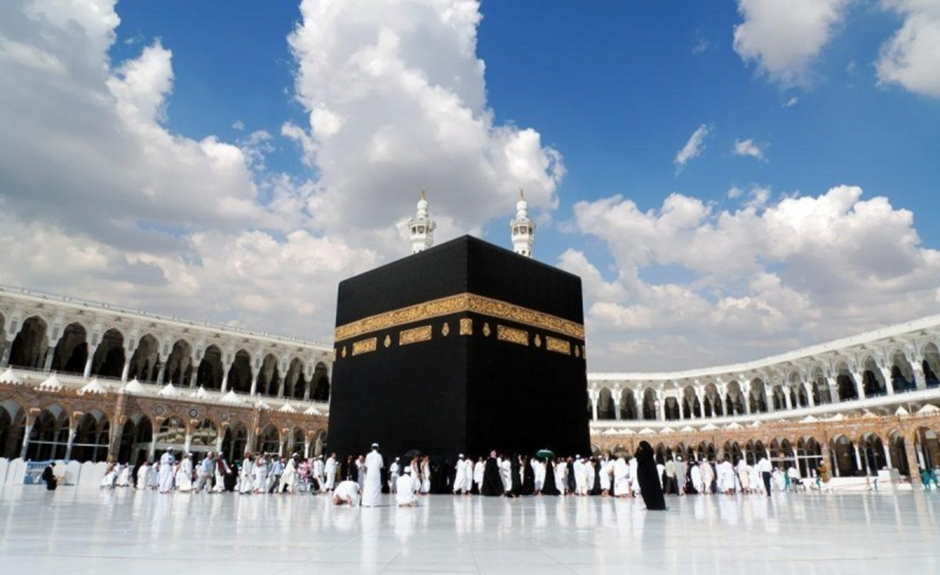
Grand Mosque ready to receive worshippers on the first Friday of Dhul-Hijjah, says the Presidency of the Haramain. The Grand Mosque in Makkah is fully prepared to receive pilgrims and worshipers on Friday, the General Presidency for the Affairs of the Two Holy Mosques has said. According to Jeddah-based English daily, Arab News, This Friday will one of the busiest during the year as many pilgrims have already arrived in Makkah ahead of Hajj which will start on the 8th of Dhul Al-Hijjah, 7 July, 2022.


The presidency has enlisted 400 employees to receive worshipers and pilgrims, direct them to the mataf and various other prayer spaces, and regulate entry and exit to and from the Grand Mosque.

Cleaning and sterilization operations have also been intensified, the paper reported and mentioned, Around 4,000 employees clean the Grand Mosque ten times a day using 13,000 liters of disinfectants.

As regards the distribution of Zamzam water,  there has been an increase in Zamzam water being distributed to visitors. It is reported and added, “There are 25,000 Zamzam containers dotted around the mosque, 20 smart carts holding 80 litres of water are in operation, and 516 drinking fountains are available.”

Arab News also reported, 600 employees have been enlisted at the doors of the mosque to receive visitors and direct them to the correct areas, organize entry and exit, and support security personnel in diverting and directing worshipers when prayer areas get filled up. 100 employees are on hand to help pilgrims perform tawaf and other rituals in accordance with the correct manner, the presidency added.

[Courtesy:Arab News]

Thursday, 30 June 2022

The Importance and Significance of First Ten Days of Dhul Hijjah-Eid-ul-Adha Prayers at London Central Mosque

 The Importance and Significance of the

First Ten Days of Dhul-Hijjah


Dr Mozammel Haque

Every year Allah Subhanahu wa Taala has given hundreds and thousands of rewards or the door of blessings and rewards open for HIS slaves and worshippers – especially on two occasions – the last ten days of Ramadan along with the blessed Night of Power (Lailatul Qadr) immediately followed by a happy day for the worshippers – Eid-ul-Fitr. Similarly, instead of last ten days, this time the first ten days of the month of Dhul Hijjah is the blessed days – full of blessings and rewards from Allah Subhanahu wa Taala along with Arafah Day (9th of Dhul Hijjah) followed by a happy day – Eid-ul-Adha.


First day of Dhul-Hijjah

Thursday, 30 June 2022

Saudi Arabia has announced Dhul-Hijjah starts today, Thursday, the 30th of June 2022 following  the sighting of  the crescent moon on Wednesday evening. Saudi Arabia announced that the five-day Eid-ul-Adha celebration will begin on 9 July, 2022. This will be the 10th day of Dhul Hijjah, the 12th month of the Islamic Hijri calender.


Arafat Day on Friday, 8th of July 2022

Dhul-Hijjah, the 12th month of this year 1443 Hijri begins today, Thursday, 30 June 2022. Hajj will start on the 7th day of Dhul-Hijjah, corresponding to 6th of July and end on the 11th day of Dhul-Hijjah, corresponding to 10th of July. Arafat Day falls on the 9th day of Dhul-Hijjah, corresponding to 8th of July, 2022. Eid-ul-Adha will begin inshaAllah on Saturday, the 9th of July 2022.


Now this first ten days of the month of Dhul Hijjah is very important and significant. Those who have gone for Hajj they will be in Makkah, Mina, Arafah and Muzdalifah. But those who are not in Makkah and other holy sites for them these days are very important days too. The earlier Muslims used to take this opportunity to make themselves better.

Importance of First Ten Days of Dhul-Hijjah

About the importance of the First ten days of Dhul-Hijjah, Prophet Muhammad peace and blessings be upon him said: “There are no days on which righteous deeds are more beloved to Allah than these ten days; meaning the first ten days of Dhul-Hijjah. (Bukhari).

And there is another Hadith about the fasting on the Arafat Day wherein Prophet Muhammad peace and blessings be upon him said: “Fasting on the Day of Arafat expiates the sins of the past year and the coming year.” (Muslim)

Eid Mubarak to all of you and your families and everyone.

Kullu Aam wa Antum bil Khair.

Thursday, 30 June 2022 is the First day of Dhul-Hijjah 1443H. So the Day of Arafah will be on Friday, the 8th of July 2022 the 9th day of Dhul Hijjah the Arafah day and Eid al-Adha will be Insha’Allah on Saturday the 9th of July 2022 corresponding to 10 Dhul-Hijjah 1443H after the day of Arafah. I wish everyone a blessed life full of happiness, peace and prosperity.


Eid-ul-Adha in the United Kingdom

Islamic Cultural Centre & The London Central Mosque Trust has announced that the Eid-ul-Adha will be held on Saturday, the 9th of July, 2022.


Islamic Cultural Centre & The London Central Mosque Trusts has announced the timetable of Eid-ul-Adha prayers 10the Dhul-Hijjah 1443 Hijri corresponding to 9th July 2022.


Wednesday, 22 June 2022

Preparations for Hajj 2022 in Full Swing

Preparations for Hajj 2022 in Full Swing

Dr Mozammel Haque


Saudi Arabia’s efforts to organize Hajj 2022 and improve the services offered to Hajjis every year is really praiseworthy

Saudi Arabia has permitted up to 1 million people to join the Hajj this year, inviting pilgrims from foreign countries for the first time in two years, after COVID-19 restrictions saw the annual pilgrimage limited to residents of the Kingdom.

Full immunization is required. Full COVID-19 vaccination still required for Hajj, the Saudi Ministry of Hajj and Umrah said. Those not fully immunized would be denied a Hajj permit.The Saudi Ministry of Hajj and Umrah said that full immunization with one of the approved COVID19- vaccines is still required for those planning to perform Hajj this year.

Almost 300,000 applied in Saudi e-draw for Hajj, according to Saudi Ministry. A total of 297,444 applications have been registered in the electronic draw for citizens and residents inside the Kingdom for the 2022 Hajj season, Saudi Arabia’s Ministry of Hajj and Umrah said recently. According to the Ministry, 62 per cent of the applicants are men and 38 percent women.

 Saudi Deputy Minister of Hajj and Umrah Abdulfattah Mashat said that the electronic system sets several conditions in the selection process. Applicants should not be older than 65 and must be completely immunized according to the status in the Tawakkalna app.

Saudi authorities unveil operational plan for Hajj


Saudi Arabia’s General Presidency for the Affairs of the Two Holy Mosques on Sunday, 19 June 2022 launched its operational plan for this year’s Hajj season The presidency confirmed its readiness to receive 1 million pilgrims, saying that it has mobilized 10,000 male and female employees and workers to serve the worshippers.

Sheikh Abdulrahman Al-Sudais, the  president of the General Presidency for the Affairs of the Two Holy Mosques, launched the plan in the presence of the Minister of Hajj and Umrah, Tawfiq Al-Rabiah, and the Director of the General Directorate of Public Security, Lt. Gen. Mohammed Abdullah Al-Bassami. Imam Sheikh Dr. Al-Sudais said that all topics, services and programs were being followed up minute by minute to ensure the highest quality, through a set of indicators supervised by the presidency around the clock

The President Sheikh Al-Sudais said that the presidency had launched smart applications and electronic platforms that would facilitate and enrich visitors’ experiences, revealing that the number of beneficiaries of this digital service had reached more than 160 million.

Entry Gate: Sheikh Al-Sudais also said that the presidency has allocated King Abdulaziz Gate, King Fahd Gate, and Bab Al-Salam Gate for the entry of pilgrims and visitors, adding that the presidency has allocated a total of 144 gates for the entry of worshippers to the Grand Mosque.

Zamzam water bottles As regards Zamzam water, the Presidency is working on distributing 3 million Zamzam water bottles in day in the Grand Mosque, and 1 million Zamzam water bottles in the holy sites.

Electric vehicles: President Sheikh Al-Sudais said that 2,000 electric vehicles had been provided to serve the elderly and people with disabilities, in addition to providing 500 engineering staff, and that the sermon of Arafa would be translated into 10 different languages.


Other services

New Luggage Transport Services: Saudia is offering a new luggage service for its Hajj customers traveling on international flights, collecting luggage from their hotel or other accommodation in Makkah and Madinah 24 hours before their departure, and and delivering it to the correct airport baggage center before they arrive. It allows passengers to travel easily without worrying about carrying around their luggage after their pilgrimage. The airline is also issuing Hajj pilgrims’ boarding passes and luggage tags to eliminate hold-ups during chack-in.

The regulations concern items not allowed in carry-on luggage, including Zamzam water, bags with loose or long straps, irregular shaped or damaged boxes, and ensuring that luggage is in good condition for travel by being organized and packed with caution.

Saudi Hajj Teams can speak 13 languages: The General Directorate of Passports’ field teams for this year’s Hajj can communicate with pilgrims in 13 languages, including English, Spanish, Indonesian, Japanese, Persian, Urdu, Turkish, Portuguese, and Bangladeshi. The field teams have been deployed at Jeddah’s King Abdulaziz International Airport and Madinah’s Prince Mohammed bin Abdulaziz International Airport.

4.8 million meals per day: Catering Companies provide 4.8 million meals per day during Hajj. A Muslim pilgrim receives food on the plains of Arafat during the annual Hajj pilgrimage outside the holy city of Makkah, Saudi Arabia (REUTERS).

Some 195 catering companies and kitchen owners approved by Makkah’s municipality are expected to provide around 4.8 million meals per day to pilgrims during the Hajj season this year.


Tuesday, 21 June 2022

Hajj - A Lifetime Spiritual Journey


Hajj: A Lifetime Spiritual Journey

Dr. Mozammel Haque

 ISLAM IS A PRACTICAL RELIGION which lays down a complete code of life. It makes various provisions for creating peace and harmony in the lives of mankind as well as in the universe. Peace and harmony can be achieved only when there is solidarity and universal brotherhood among human beings. Islam preaches this concept and puts it into practice through the unique annual assemblage of the pilgrims during Hajj.

 The institution of Hajj in Islam is quite extraordinary and unparalleled. It is only Islam that has made the annual assemblage at one place, Makkah, an obligation for the capable Muslims from all corners of the world. In other words, it may be called the World Muslim Congress. This assembly has many distinctive features which no other gathering has and no other religion stipulates. The concept of unity and brotherhood is embedded in Islam in such a way that one is truly amazed to see millions of Muslims dressed in two white sheets of cloth gathered at one particular place, i.e. in Arafat during a fixed time on certain fixed days in the year. All human and man-made barriers and distinctions are demolished during that assembly.

We shall here deal with the aspects of unity and universal brotherhood which, besides others, are quintessential among the concepts of Hajj. First, let us take universal brotherhood. This universal brotherhood emanates from the following basic concepts and is demonstrated in a most authentic and brilliant manner here on this occasion:

Adam is the first man from whom all human beings have sprung up;

Abraham is the father of monotheistic religion;

Acceptance of all prophets as prophets of God;

Belief in all revealed books of Allah.


Thus, this acceptance of Abraham as the patriarch of the concept of Tawheed and recognition of the continuity of Prophethood from Prophet Adam to the Last Prophet Muhammad (peace be upon him) and having faith in all revealed books keeps up a chain of faith known as Islam throughout the world. This binds the whole humankind into a bond of brotherhood whose genealogical father is Adam and the spiritual father Abraham. Thus Muslims believe in the continuation of the human race on earth. There are no conflicts and controversies in the monotheistic religion decreed by God. All Muslims (those who consciously and willingly surrender to the Will of the Creator) belong to this Ummah and therefore constitute a fraternity of faith. This is one way the Hajj conveys the message of universal brotherhood.

 This aspect of universal brotherhood can also be noticed during Hajj when Muslims come from remote corners of the world and congregate in Makkah in the vicinity of the House of God, i.e. Baitullah. Though they might have come from the east or west, north or south, and all differences in colour, language, race and nationality notwithstanding, they find their oneness on the basis of their faith in One God, One Qiblah, One Book and One Prophet.

 The practical training for this universal brotherhood starts from the local or neighbourhood level with the five times daily prayers in the mosque, which gets enlarged with the Friday prayers once a week. The circle is again made substantially larger during the Eid prayer, and it becomes internationalised transforming into a global gathering once in a lifetime. So the concept and training in universal brotherhood, which reaches its peak, starts from the very childhood at the local level.

 As regards unity, Islam, first of all, removed all man-made bonds and barriers bringing all human beings into one global family tracing their genealogical origin to common parents and biological chemistry to one element, i.e. clay. Almighty God has laid down in the Holy Qur’an, “O Mankind, We have created you from a male and a female.” (49: 13) This establishment of absolute equality on the basis of their ancestral origin and biological composition removes all artificial differences between man and man.

 The enforcement of the concept of Muslim brotherhood is the greatest social ideal of Islam. Islam places emphasis on unity and unifies mankind on the basis of one God, one Book - the Qur’an, one Qibla - the Ka’aba and one leader - the Prophet Muhammad (peace be upon him). The Noble Prophet’s mission was to establish unity and peace throughout the world. The Islamic concept of unity transcends all other forms of unity based on territory, geographical boundary, linguistic and ethnic affinity. He united Muslims on the basis of faith, which is the Oneness of God, Islam.

On this vital concept was based the Prophet’s sermon in his last pilgrimage, which shows that Islam cannot be completely practiced until this ideal is achieved. Prophet Muhammad (peace be upon him) unified and cemented the Muslim Ummah under the banner of La ilaha illallah Muhammadur-Rasoolullah by establishing the first-ever Islamic state in Madina, which later on took the shape of a grand Caliphate. Under the Caliphate the Muslim Ummah was unified and integrated. Thus the first concept of universal and worldwide unity was demonstrated by Prophet Muhammad more than fourteen hundred years ago having been guided and inspired by God for establishing unity and peace in the world.

 Islam is essentially a community and group-oriented religion. So, the practical lesson in unity and equality first starts within the family, then in the neighbourhood, especially through the institution of five daily prayers in the mosque and still on a larger scale in the locality, during weekly Friday prayers, and then in much larger gatherings in the two Eid prayers and ultimately in the international or global gathering during Hajj. This very characteristic and feature of Islam demonstrates the universality of this religion and its heavenly origin which transcends all worldly barriers of race, colour, class and nationality.

 Pilgrimage is the best occasion to bind again the loose threads, tighten them on the basis of belief and in the presence of God and frustrate the nefarious machinations of the enemies of the Ummah’s unity.

 Another aspect of Hajj is making sacrifice in the way of God for the cause of Islam. As Islam itself is a religion of sacrifice, its different pillars also contain the same features and characteristics. It is a known fact that the Islamic or Hijra calendar starts with the month of Muharram and ends with the month of Hajj. The first month of the Islamic calendar, Muharram, is the month of sacrifice – a sacrifice made by the grandson of Muhammad, Hussain ibn Ali, who laid down his life at Kufa in the cause of Islam and its ideals. Similarly, the 12 months of the Hijra calendar, the month of Hajj, marks the remembrance of the sacrifice made by the Prophet Ibrahim for the sake of God and His Pleasure.

 The Patriarch, the first Prophet of monotheistic religion, Islam, the Prophet Ibrahim was ready to sacrifice his most loved one for the sake of God. He loved his only son, Ismail, more than anything else. God asked him to sacrifice Ismail. Ibrahim was going to sacrifice Ismail, in the way of God by His Order. The Holy Qur’an explains the story of Ibrahim and his son Ismail thus:

Then when (the son) reached (the age of) (serious) work with him, he said: “O my son; I see in vision that I offer you in sacrifice. Now say what is your view.” (The son) said: “O my father; do as you are commanded; you will find me, if God so wills, one practising patience and constancy.” So when they had both submitted their wills (to God), and he had laid him prostrate on his forehead (for sacrifice), We called out to him, “O Ibrahim; you have already fulfilled the vision; thus indeed do We reward those who do right.” (37:102-105) The Qur’an says: “And We ransomed him with a momentous sacrifice.” (37:107)

The sacrifices made by Prophets Ibrahim and Ismail for the love of God left an indelible imprint on the history of mankind. This sacrifice is still remembered and re-enacted during Hajj. Ibrahim left a glorious record of sacrifice to please God.

 In modern times, sacrifice is symbolised by an act of slaughtering a camel, cow or lamb for the sake of God during the days of Eid-al Adha, i.e. starting after the Eid prayer till the sunset on the third day of Eid. Sacrifice is a strongly recommended Sunnah of the Prophet and was introduced in the second year after Hijra. The purpose of sacrifice is to remind oneself of the great sacrifice of Ibrahim.


The sacrifice of life and wealth in the way of God is the zenith of a man’s belief. God says: “By no means shall you attain righteousness unless you give (freely) of that which you love; and whatever you give, of a truth God knows it well.” (Al-Qur’an 3:92) This means that when something, which has been held so dear, is sacrificed in the way of God one may hope to secure God’s Pleasure. The verse tells us that to attain righteousness one has to sacrifice things, but to attain it in perfection one has to sacrifice things, dearer to one.

 Every sacrifice and every effort is to be aimed at seeking God’s Pleasure. That God be pleased with us is the real capital of our lives and it is to win this pleasure that everything should be sacrificed. In the words of the Qur’an: “Surely my prayers and my sacrifice, my life and my death is for God alone, the Lord of the Universe.”

 In the modern age, the pilgrims, when they start their journey to Makkah for performing Hajj with only two white sheets on their bodies leaving behind their wives, children, kith and kin and their wealth and properties, they practically exemplify their act of sacrifice for the love of God.

 Hajj is the greatest training and practical demonstration of the spirit of sacrifice and the spirit of Jihad in the way of God. It shows that Islam does not end with giving some utopian ideals for the human life. It is not only a religion, it is the guidance for the whole mankind to shape their lives in this world and hereafter. That’s why God makes provision for the teaching and training of humankind in every quality through practical implementation.


Friday, 6 May 2022

Eid-ul-Fitre Messages from UK Political Leaders

UK Political Leaders Eid-ul-Fitre Messages

Dr. Mozammel Haque


Followings are the Eid-ul-Fitre Messages from the UK political leaders exclusive to @the Muslim News London:


Exclusive: Eid al-Fitr messages from UK Political leaders:


Rt Hon Sir Keir Starmer MP

Leader of Labour Party


I would like to wish Muslims in the UK and around the world Eid Mubarak.

Like last year, I know this Ramadan has been different and you haven’t been able to gather in person. This will be particularly difficult at Eid, especially for those who are separated from family and friends. But there is now light at the end of the tunnel and I want to thank Muslim communities who have contributed so much in the fight against Covid.

 I would like to say a huge thank you to Muslim key workers who have worked tirelessly over the last year.

 And thank you to the countless volunteers and community leaders in Mosques and community centres across the country. You have given up your time and opened your doors supporting the delivery of the vaccine and looking out for the most vulnerable.

Your efforts have saved lives and kept the country going.

Although we have not been able to meet in person throughout Ramadan, I have joined online iftars and experienced the close bonds that have brought the community together. Islam teaches us about the importance of looking after one another, working towards a common purpose and striving for justice and equality. I know these values have inspired you over the last year. They inspire me.

So on behalf of the Labour Party, I want to take this opportunity to wish all Muslim communities Eid Mubarak.

Rt Hon Sir Ed Davey MP

Lib Dem Leader


I want to send warm wishes to Muslims in the UK and around the world celebrating Eid al-Fitr.

There’s no denying this past year has been immensely tough for everyone. But as we start to look forward — and dare to hope the worst of this pandemic has passed — there’s one positive that has shone through these dark times.

It’s the power of community. And Muslims across the country have exemplified this amazing community spirit.

Like the heroic NHS and frontline workers who have risked their lives to keep us safe. Or the 100 grassroots Muslim community support groups who have pulled together and helped those in need, without fanfare. And the mosques who have brought their services online — helping many overcome difficult feelings of isolation or disconnection.

As we emerge from this terrible pandemic, I truly hope we can keep this incredible community spirit alive.

So to everyone celebrating Eid I wish you joy and peace. Eid Mubarak!

 Rt Hon Nicola Sturgeon MSP

Leader, Scottish National Party

As-salaam Alaikum


On Eid al-Fitr, I want to send my very best wishes to Muslims here in Scotland and around the world.

Eid is a time for celebration and for friends and family. And I recognise that this year — like last — it will be different and difficult for so many due to Covid-19.

Even though you may not be able to celebrate it as you normally would, I hope that relaxations around congregational prayer and outdoor meetings will provide some relief and source of celebration.

The sacrifices made by the Muslim community have been difficult, but they have also been very necessary, and here in Scotland, they have helped us to make major progress in reducing COVID-19.

The Muslim community has played a key role in enabling Scotland to lift lockdown restrictions by opening up places of worship for COVID testing and to assist in the rollout of the vaccine. For that, I am extremely grateful.

On this holy festival, I want to thank all of you for helping Scotland during this crisis. I hope you and your loved ones continue to stay safe. And I hope that you all have a very happy and joyful Eid al-Fitr.

Rt Hon Mark Drakeford MS

First Minister of Wales


This year, once again, Ramadan has been observed in the long shadow cast by the pandemic in Wales.

Normal traditions, religious practices and gatherings of family and friends at the break of the daily fast have been affected by the restrictions, which continue to be needed to control the spread of this awful virus.

 A virus, which has affected so many of our communities over the last year.

Ramadan has been a time of reflection and also a time to look forward to the future with hope. And we can all look forward with hope and confidence for better times ahead.

I want to thank all our Muslim communities across Wales for their support over the last year and the way in which they have embraced the vaccination programme.

I had the privilege of visiting a vaccination clinic organised by Muslim Doctors Cymru at the Jalalia Mosque, in Cardiff, which has run every Sunday during Ramadan. It is clinics like these, which are helping to protect communities and help move us forward into the brighter future ahead.

We are also working with the Muslim Council of Wales to ensure that Eid prayers can be celebrated in an event in Cardiff. Keeping everyone safe continues to be our main priority but there is also an opportunity for the community to celebrate Eid al-Fitr together.

 I look forward to the time when we can all celebrate together once again. Until then, Eid Mubarak.

Rt Hon Sadiq Khan

Mayor of London


I would like to wish a blessed Eid to all Muslims in London, the UK and around the world, as we celebrate this occasion.  

The last year has seen us face exceptional challenges, and my thoughts remain with all who have lost loved ones throughout this time. 

The long fasts have been incredibly tough and as they draw to a close, for the second year in a row our communities are not able to come together as we normally would. Rather than celebrating Eid in Trafalgar Square, connecting in larger numbers in mosques across our city or embracing family and friends, we must once again continue to play our part in stopping the spread of Covid-19. 

I know how disappointing it has been having to adapt again this Ramadan, but as lockdown gradually eases, like many other Muslims in the UK I now look forward to celebrating Eid in person as fully as the restrictions allow.  

So, whether you are enjoying a picnic in the park, hosting a gathering in your garden or celebrating within a bubble, I urge everyone to continue to follow the rules that are in place to protect our loved ones and the wider community.

And as the roll-out of the vaccination programme continues my message is simple, when you are invited to receive the jab, please say yes. I have had both doses and can testify – it is safe, it is halal and gives us a great deal of hope for the future.

The Muslim community has shown enormous strength and courage over the last year, with mosques in London and across the country going to incredible lengths to support those in need and whole communities coming together in extraordinary acts of kindness. 

I want to thank Muslims across London for the sacrifices they have made during this time, it brings me great joy that we are beginning to be able to come together to celebrate once again.  

 Courtesy: @The Muslim News, London

Acknowledgement: The Muslim News London


Tuesday, 3 May 2022

Eid-ul-Fitre Mubarak to All of You


EID MUBARAK TO YOU ALL


                                                        Dr. Mozammel Haque


Eid-ul-Fitr Mubarak to all of you.

Saudi Arabia  announced on Saturday 30 April, 2022  that Eid-ul-Fitr will officially begin on Monday, 2nd of May, 2022. Saudi Arabia celebrated Eid ul Fitr on Monday as Shawwal moon was not sighted on Saturday. Haramain posted, the moon has not been sighted in Saudi Arabia. Eid ul Fitr will be celebrated on Monday 2nd of May 2022, Insha Allah.

 Monday, 2nd of May 2022 was Eid-ul-Fitre, Insha Allah, in the United Kingdom according to London Central Mosque Trust & The Islamic Cultural Centre, London. Eid Mubarak to you all. May Allah accept our prayers, fasting, Taraweeh, Telawet-e Qur’an, charity, Ibadah and good deeds and let us witness the next Ramadan. Ameen.


King Salman bin Abdulaziz, the Custodian of Haramain – the Two Holy Mosques- wished Muslims around the world a blessed Eid-ul-Fitr, state news agency SPA reported on Sunday.


The message of  King Salman bin Abdulaziz on the occasion of Eid-ul Fitre  are as follows (in Full) :

 Find below the full transcript of the King’s speech: (English Al-Arabia.net)

 “In the name of Allah, the most merciful, the most gracious.

Praise be to Allah. May Allah's prayer and peace be upon Prophet Muhammad.

"Dear citizens and residents, in our dear country, the Kingdom of Saudi Arabia, Muslims all over the world.

 “May Allah's peace, mercy and blessings be upon you.

 “We are pleased to congratulate you on the blessed Eid Al-Fitr from the vicinity of the Grand Holy Mosque. And every year, you are very well. And may Allah turn back to us and you Eid as we enjoy security, safety, health and happiness, and protect our country and the countries of the world from all evil and harm.

“We thank Allah for what bestowing upon us and you of fasting and performing night prayers in the holy month of Ramadan, praying for accepting from us all the good deeds, as He is All-Hearing and All-Responsive.

“We also thank Allah that we have reached the happy Eid Al-Fitr, we hope that Allah Almighty will delight our hearts with Eid and help us all to achieve the purposes of the blessed Eid by showing happiness and joy.

 “Allah has made Eid an opportunity for the sublimity of morals, harmony, fraternity, tolerance and forgiveness.

 “Dear citizens,

“The great honor that Allah has bestowed on our country is by serving the Two Holy Mosques, ensuring the comfort of pilgrims, Umrah performers and visitors, and providing them with the best services, which is a source of pride for all of us, and we strive dearly in fulfillment of the responsibility that Allah has chosen us for it, and in a sense of holiness of this great duty. And we thank Allah for having succeeded in continuing this great work. Since the era of the founder late King Abdulaziz, this country has followed him under the leadership of his sons the kings after him. And we are still and remain proud, and we are honored to continue the mission with the highest efficiency and distinction.

 “It was by Allah's grace that the Kingdom re-allowed the use of the full capacity at the Grand Holy Mosque and the Prophet’s Holy Mosque, and we were pleased with Allah's help for large numbers of Umrah performers, worshipers, and visitors visiting the Two Holy Mosques in the holy month of Ramadan. And we thank Allah Who enabled us to work at the highest levels of responsibility, seriousness and innovation in facing the pandemic, and mitigating its effects, which bore positive fruits on most aspects of life, and thanks to Allah first, then to workers in all sectors, and to citizens and residents, who showed high awareness, great commitment and speed in response to the directives and instructions that were associated with the pandemic.

“In conclusion, we are proud of our brave heroes, and those stationed on the frontiers, and we thank our citizens, who work sincerely in the military and civilian sectors, praying to Allah Almighty to grant us success in all good deeds, and to protect our country from all evil.

“May Allah bless you on your Eid, and crown our and your steps with all success.

May Allah's peace, mercy and blessings be upon.” @english.alarabiya.net

 An Interview with Dr. Ahmad

 ibn Saifuddin Turkestani

I have already mentioned in my last week column the importance and significance of the last ten days and nights of the month of Ramadan. What I am going to write in today’s website seems to be repetition of the same but it is not. It is actually an interview carried out a few years ago with a renowned Islamic scholar, Professor Dr. Ahmad ibn Saifuddin al-Turkistani. He was a Professor at the Imam Saud Islamic University in Riyadh, Saudi Arabia. As early as early 80’s when the Saudi Television started the Second Channel in English, there used to be an Islamic programme entitled “Islam In Focus” run by Dr. Ahmad ibn Saifuddin every Friday just after the Jumah Prayer. It was very popular to the English knowing immigrants, particularly in Jeddah, Hejaz. I was one of them. I had the opportunity to meet him in London when he came here at the Saudi Cultural Bureau, London. I conducted an interview with him at the last week of the month of Ramadan a few years ago.

“This is one of the days that we are so much happy to live, to observe. Today is Friday and Friday is the best day the Sun has ever risen on and today is one of the days of the month of Ramadan. Ramadan is the master of the months. This is a month of blessings, favours on us. We should be thankful to Allah the Almighty for what he has given us. We are many others deprived of not enjoying the mercy of the month of Ramadan. So Alhamdolillah. Alhamdolillah, Alhamdolillah,” said Professor Dr. Ahmad ibn Saifuddin Turkistani.

Takbeer

That was for Zakat-ul-Fitr. The second form of Ibadah is Takbeer. Professor Turkistani mentioned, “It is a Sunnah to do Takbeer starting from the Maghreb of the night of Eid until Eid prayer. How do we say, what do we say? Allahu Akbar, Allahu Akbar La Ilaha Illallah Allahu Akbar Allahu Akbar walillahe wal Hamd. Any form of Takbeer is good to announce this and to obey Allah Subhanahu wa Taala as Allah said so you shall complete the number of days fasting and announce Takbeer. That’s why it is Sunnah to do Takbeer from the Maghreb to the Salat-ul-Eid in congregation. You say on yourself, you say it among Muslims, you say in the Masjid, in the house, anywhere wherever it is possible to pronounce loudly just to inform Muslims around you that this is the time of praising Allah and celebrate Eid.”


Saturday, 30 April 2022

What To Do Toward the End of the Month of Ramadan


What to do toward the end of the

month of Ramadan

 Dr. Mozammel Haque

The blessed month is approaching to the end; only a few days and nights remain. Today is Saturday, 29 Ramadan corresponding to 30th of April, 2022. Tomorrow Sunday 1st of May 2022   is 30 Ramadan subject to the sighting of moon in Saudi Arabia today’s evening.  

Saudi Arabia has officially asked local citizens to spot and report if any the new moon of Shawwal – that marks the beginning of Eid al Fitr and end of the holy month of fasting, on Saturday 29th of Ramadan 1443 AH corresponding to April 30, 2022.


"The Supreme Court of the Kingdom of Saudi Arabia has asked citizens and residents in the Kingdom to search for the crescent of Shawwal 1443 on the evening of Saturday, 29th Ramadan 1443 according to Umm Al Qura Calendar corresponding to April 30, 2022 and report any sightings to their nearest court", local media said in a report Thursday.

"The Supreme Court’s special session will sit and deliberate on Saturday evening the results of the crescent search and will issue a decision shortly after Isha Prayers", the reports added.

The Kingdom’s main observations are made from Sudair and Tumair and sightings from these cities are part of the official decision.

According to local media reports of the Kingdom of Saudi Arabia, several Astronomers have said that there are less chances of the crescent of being seen on Saturday evening and the month of Ramadan 1443 is likely to complete 30 days.

An Interview with Dr. Ahmad

 ibn Saifuddin Turkestani

I have already mentioned in my last week column the importance and significance of the last ten days and nights of the month of Ramadan. What I am going to write in today’s column seems to be repetition of the same but it is not. It is actually an interview carried out a few years ago with a renowned Islamic scholar, Professor Dr. Ahmad ibn Saifuddin al-Turkistani. He was a Professor at the Imam Saud Islamic University in Riyadh, Saudi Arabia. As early as early 80’s when the Saudi Television started the Second Channel in English, there used to be an Islamic programme entitled “Islam In Focus” run by Dr. Ahmad ibn Saifuddin every Friday just after the Jumah Prayer. It was very popular to the English knowing immigrants, particularly in Jeddah, Hejaz. I was one of them. I had the opportunity to meet him in London when he came here at the Saudi Cultural Bureau, London. I conducted an interview with him at the last week of the month of Ramadan a few years ago.

 “This is one of the days that we are so much happy to live, to observe. Today is Friday and Friday is the best day the Sun has ever risen on and today is one of the days of the month of Ramadan. Ramadan is the master of the months. This is a month of blessings, favours on us. We should be thankful to Allah the Almighty for what he has given us. We are many others deprived of not enjoying the mercy of the month of Ramadan. So Alhamdolillah. Alhamdolillah, Alhamdolillah,” said Professor Dr. Ahmad ibn Saifuddin Turkistani.

Lailatul Qadr


We have only a few days and nights are left but still they are very important. Only yesterday we have been receiving the month, just yesterday, 28 days past but still the best is there, 29th night of Ramadan; there is Lailatul Qadr. Professor Turkistani asked do you know what Lailatul Qadr is and said, “It is better than 1000 months; by simple calculation, Lailatul Qadr is better than more than 83 years. Just imagine 84 years. The average life of Muslims, most Muslims die before their age; which means you are getting the reward of more than 83 years. Even better, because Allah Subhanahu wa Taala says Lailatul Qadr khairun. This is a golden opportunity; it’s a gift even to this Ummah and we shall take it. It’s worth to take a vacation, to take some days off your work; to leave all things at your hands and get this opportunity. Only a few days. Then they will be gone.”

Narrating the blessing of this month of Ramadan, Professor Turkistani said, “This night is so much blessed. The Angels will come down and will bring blessings and Allah Subhanahu wa Taala will forgive anyone who is committed to Allah on that night reciting the Glorious Qur’an, engage in prayer, doing all the good deeds that a person can do. Even if you stay awake all the night it’s worth it. When the last ten days come on his own life, the Prophet peace be upon him would avoid sleep during the nights of the last ten days. And he would stay away from his wives only concentrating on Ibadah. It’s worth it.”

“It is nine days or ten days for more than 83 years what a bargain. Why can you not use it brothers and sisters. This is what Allah Subhanahu wa Taala has promised us.  This stays  until Fajr; until the coming dawn; so we shall be very much interested in this. Anyone who misses that he is a deprived one. Deprived. We shall not be deprived of this great prize, a great opportunity,” said Professor Turkistani.

 What a blessing! What a gift!

Professor Turkistani also mentioned what a bargain it is. He said, “Just say a one good thing:  SubhanAllah Alhamdo lillah La ilaha Illallah Allahu Akbar.  It is like you have done for 83 years and 4 months. What a blessing; what a gift that is given to us this opportunity the biggest bargain. I do not see any bargain better than that. You see that? Even when people bargain, they go to stores and markets and online trying to buy the best thing that they need and they dream of. They say ouh; this is the biggest bargain; no, wallahe, the bargain is Lailatul Qadr. This is the biggest bargain.”


Professor Turkistani urged people “Please do not let it go away without cashing as much as you can; devote the rest of the time for Ibadah; because that will affect the rest of your life. It should, if you surely coming towards Allah with Taubah from your heart, from inside, then Allah will accept you, Insha Allah and then Insha Allah, you would be happy for the rest of your life. You would be guided on the straight path. So you keep on the truck until you meet Allah Subhanahu wa Taala. This is the time and that’s why Allah Subhanahu wa Taala promises that you stand with imaan and Ihtesab. imaan believing in Allah and believing in His Rewards and Ihtesaban seeking the rewards from Allah Subhanahu wa Taala alone; not from any one else and all your previous sins are forgiven. You fast the month of Ramadan all your previous sins are forgiven if again if you stand up in Salah during all the month of Ramadan and you should do it out of Imaan and Ihtesab and all your previous sins are forgiven.”

Zakat-ul-Fitr

Professor Turkistani mentioned the first of those Ibadah is the Zakat-ul-Fitr.  He said, “Zakat-ul-Fitr is the source of purification and feeding of the poor and the needy. It is a source of purification for yourself in case you have committed some sins and who amongst us has not committed something wrong in the month of Ramadan or any other time and it is something to feed the poor and the needy.”

How Zakat-ul-Fitr is estimated? Enquired Professor Turkistani and promptly answered, “It is estimated Soa as in the Hadith of Abu Sayeed al-Khudri (RA) follow the Rasoolullah peace be upon him. He gave examples, all these types of food. So it means that we should give Zakat-ul-Fitr in food, not in money. I know that Imam Abu Hanifah (Rahimullah) said it is permissible to do in money but the Prophet peace be upon him and the Companions did not give Zakat-ul-Fitr in money. They gave it in food. They could have given in money; they would pay Zakat-ul-Maal or any type of Zakah from wealth, from money. Zakat-ul-Fitr again so that the poor and the needy have not to seek on the day of Eid, they should be happy; they should enjoy with the rest of the Muslim community. That’s why, we should have to give it in food.”

Again, Professor Turkistani enquired, “How do we do it?” and answered, “Well, lets seek the poor and the needy in our community. If we have someone we know who is in need we shall give Zakat-ul-Fitr to these people. If we do not know people, then we shall give the money to the trusted charities and organisations that collect the money, buy the food and give it to the poor and the needy on your behalf. If not in this country; if this country would not  have poor people to the extent that they can be receiving Zakat-ul-Fitr, there are many people up there, in Africa, Asia and throughout the Muslim World who need this food who cannot buy who stay at night starving.”

 “In Syria, for example, as you have heard from your brothers, telling you that the Ulema in that country in their Fatwa people eat cats and rats because they do not have the food to eat. Situations because of the war going on in Syria; and the same thing with other people who are starving and do not have the food. This is the way to express your own sympathy with your brothers. This is something that you need to do and Zakat-ul-Fitr is a must. It’s not a choice and it is for everyone in the household, everyone. Even those who think they are poor; if they have a food for a day and a night, they should give out Zakat-ul-Fitr. If they have enough for one day, they should give Zakah to other poor people and the needy people and that would be a Saa,” said Professor Turkistani in his Khutba (Sermon).

How that would be translated into today’s measurement? Professor Turkistani asked and promptly replied, “It would be about two kilogram and a quarter. If you pay three kilograms of any types of food, rice, dates, barley, anything that people eat, which is an edible thing; something they can keep and preserve. You cannot give out, in meat, for example, or something that can be immediately consumed; cooked food, for example. It has to be a food that the poor and the needy can save and can prepare their own meals. For everyone in the household, young or old, male or female, the newly born, anyone born before the sun set of the last day of the month of Ramadan has to be given Zakat-ul-Fitr and it is the responsibility of the head of the household; those who spent is the man who is earning and even if it is the woman who is earning and spending in the family then it is their responsibility to pay.”

When shall we pay it? Professor Turkistani again enquired and said, “Not until before Eid day; at least two days before Eid and it shall be given out before Salat-ul-Eid, otherwise it would not be Zakat-ul-Fitr; it would be sadaqah. And it would not do its purpose unless it is done and given to the poor and the needy so that they can go for the Eid prayer and happy. They feel that they have enough and they can share with the Muslim community. Nice occasion and celebrate Eid along with them.”

Think about the people who became homeless due to the terrible horrific London Tower Fire at Kensington West London. Help those people with whatever you have and whatever you can give either food, clothes, material and donations. At this stage, this charity, this donation near to your home, near to your locality, near to your neighbour is most important and they deserve to have your Zakat, alms-giving and charity.

 Takbeer

That was for Zakat-ul-Fitr. The second form of Ibadah is Takbeer. Professor Turkistani mentioned, “It is a Sunnah to do Takbeer starting from the Maghreb of the night of Eid until Eid prayer. How do we say, what do we say? Allahu Akbar, Allahu Akbar La Ilaha Illallah Allahu Akbar Allahu Akbar walillahe wal Hamd. Any form of Takbeer is good to announce this and to obey Allah Subhanahu wa Taala as Allah said so you shall complete the number of days fasting and announce Takbeer. That’s why it is Sunnah to do Takbeer from the Maghreb to the Salat-ul-Eid in congregation. You say on yourself, you say it among Muslims, you say in the Masjid, in the house, anywhere wherever it is possible to pronounce loudly just to inform Muslims around you that this is the time of praising Allah and celebrate Eid.”

 Salat-ul-Eid

The third form of Ibadah during the end of the month of Ramadan is Salat-ul-Eid. Professor Turkistani mentioned, “We need to come to Salat-ul-Eid. Salat-ul-Eid is an obligation upon the whole community, but for every individual it is something strongly recommended. Some people choose to sleep on the morning of Eid and miss the prizes because during the day of Eid as people are coming to the prayer the Angels are standing at the doors giving prizes. You wouldn’t see them but belief me, if you have done well in the month of Ramadan you receive prize on the day of Eid. That’s why it is important to come to Eid prayer and to receive the prize and look and see that prize on the day of Eid. So on the Eid, take complete bath and then wear the must you have, put on perfume for man, but not for woman because you will attract the opposite gender, and then come to Salatul Eid to attend and celebrate with the rest of the community Eid. Everyone, man and woman, young or old, shall come to Eid prayer; without exception, even women who are having the menstruation. But they should avoid area of prayer, area of musalla. But they should come and be among the community to enjoy this occasion along with the rest of the Muslims. This is the third Ibadah.”

Fasting is prohibited on Eid Day

Fasting is prohibited on the day of Eid. “We need to break on the day of Eid of fast because it is prohibited to fast on the day of Eid,” said Professor Turkistani and added, “It is a gift from Allah and we shall receive it and how do we break we break it with date, one or three or five or more, eat single or odd number of dates on the day of Eid in your home before you come out. And it is Sunnah to go from one way and to return another way in order to meet as many people and to greet them on the day of Eid. Eid is the day of forgiveness, a day when you really forgive those who have done wrong to you. This is the time to show forgiveness and Allah who give you forgiveness in return.”