Monday, 9 July 2018

Islam Channel Celebrates Eid Festival

Islam Channel Celebrates Eid Festival
at London Marriott Hotel

Dr. Mozammel Haque

Islam Channel celebrated Eid Festival by organising Eid Gala Dinner at London Marriott Hotel, Grosvenor Square, London, on 29th June 2018. It has a compact and comprehensive programme of speeches, Nasheed and talk about Islamic Relief. The Gala Dinner was attended by CEO of Islam Channel Mr. Mohamed Ali, Lords and Ladies, Members of Parliament, Members of British Cabinet, Mayors, distinguished leaders of the Muslim community and heads of different charities.

Islam Channel Eid Gala Dinner
Among the speakers there were Helen Stephenson, CBE, CEO of Charity Commission, Sir Iqbal Sacranie, OBE, Senior Advisor of Muslim Council of Britain, The Rt. Hon. Lord Paddick, former Deputy Assistant Commissioner, Baroness Manzila Uddin, Chair, National Commission of Muslim Women, Lord Sheikh, Member of Parliament; Councillor Magid Magid, Lord Mayor of Sheffield and others. Among the Nasheed Artist, there were Awais Iqbal, Najam Sheraz, Yasir Akhter and comedian Bilal Zafar.

Helen Stephenson, CBE
The opening address was delivered by the CEO of Islam Channel, Mohamed Ali Harrath followed by Helen Stephenson, CBE, CEO of Charity Commission. CEO of Charity Commission, Helen mentioned in her speech about the contribution of the Muslim Community in Britain. She mentioned a figure of 100 million pounds collected from the month of Ramadan by the Muslim community for the helpless for the needy in the world.

Dr. Hany El-Banna
Dr. Hany El-Banna, President of the Humanitarian Forum UK, delivered a speech. In his speech, Dr. El-Banna said, “I am going to take you through a journey. I am a human. But Allah has created the whole creation to serve me and made me a custodian for all the creation of God. Before I landed on earth everybody everything on earth has been created to serve me. I am a human. Then my mother born me or deliver me on a piece of land. So I am relating myself to develop such a piece of land and to look at my nationality as a British, as a French, as a Pakistani, or Bengali or Egyptian or Palestinian or Lebanese or whatever it is and I am a believer who found his way through the teachings of the Lord, Allah  Subhanahu wa Taala; and so I have the three in one; the one who can carry the three values - the value of humanity, the value of faith and the value of my country, and  this is the Islam that I am standing for; I am a human, I am a national citizen and I am a believer at the same time.”

Talking of Muslim duty, Dr. El-Banna said, “Our duty as a Muslim is two: to develop any piece of land but Allah Almighty granted us to live on this surface. To build the community, to build peace, to build civilisation and to empower people and make them independent and establish justice on earth. This is the definition of human being who is loyal to his Lord, loyal to humanity and loyal to his country at the same time.”


Speaking about charity, Dr. El-Banna said, “Charity is not about fund raising; charity is not about PR or media or who comes first or who claim I am the first and you are the last; I am the best and you are the worst. Charity is a gin in the heart of every human being or every creation of God that Allah Subhanahu wa Taala created on this planet to those act of charitable activities. The charity work goes beyond fund raising; goes beyond PR and media and talking and inflating things. Charity work is inclusivity, one who includes the local community is members in Somalia, in India, in Pakistan in Bangladesh and in the UK as well. To include them. This is inclusivity.”

“Charity work is about transference anything comes to the charity must be declared charity work is to build a community; how to build a stronger community; how to build future of such disadvantaged, marginalised poor community not about who is first. Never claim about the first because the first responder is the local community in Kashmir, in Myanmar or whatever it is,” said Dr. El-Banna and mentioned, “Charity work is for the humanity whether they are Muslim or non-Muslim; whether they are Muslim country or non-Muslim country; whether they are in UK or outside UK; should be every human being who are in need of UK or abroad.”

Dr. El-Banna also said, “Charity work is about creating future leadership of the future generation. Charity work is about being a partner to the government who is granting us the license to work. Charity work is about the ability, bench marking and good governance work and about advocacy - this is the charity work which we wanted to every charity.”

Concluding his speech, Dr. El-Banna mentioned again, “I am a human; I am a believer and I am a partisan to my country. I love the three because this is the humanity that Allah asks me to carry in my heart.”

Sir Iqbal Sacranie, OBE
Sir Iqbal Sacranie, OBE, senior Advisor of the Muslim Council of Britain, gave a speech. Before delivering his speech he requested a bit of patience from the gathering and he was convinced that that type of patience the Muslim community during the month of Ramadan. He also told the gathering that Insha Allah the programme of this evening time up in such a manner you will have an opportunity to listen to some interesting events and of course hear some of the speeches from different charity as well.

Sir Iqbal appreciated the “the wonderful work that we have done in the month of Ramadan and have the wonderful feeling of brotherhood working together with faith or no faith and more importantly how obedient to our Creator.”

In this connection Sir Iqbal said there is something more for celebration. He mentioned, “I think it is important for us to bring the oneself of appreciation as well, those of us who are involved organising events over the years in different capacities are well aware of the difficult task putting together such an event and congratulate in the first place to CEO and the entire team of Islam Channel, Alhamdolillah, for putting such a wonderful event. So congratulate them.”

Sir Iqbal also asked the gathering to congratulate the Muslim community. He said, “We have to appreciate the Muslim community across the UK, who we heard early from the CEO of Charity Commission that she mentioned a figure of one hundred million pounds collected during the month of Ramadan by the Muslim community for the helpless for the needy in the world.”
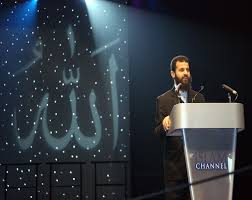

“I understand the figure was 200 million pounds but even that the 100 million pounds Alhamdo Lillah it’s a figure with the Muslim community across the UK we need to be very proud and thankful to our Creator to give us this opportunity to contribute and to help the poor and needy around the world,” said Sir Iqbal Sacranie and added, “This contribution should not be underestimated; actually when the figure is combined to people of other faiths, no faith as well. And when we saw so much about the Muslim community solely in the very negative tone; this is one thing that perhaps requires a better understanding.”

Sir Iqbal emphasized, “So those who continued demonise castigate the Muslim community in the charity sector and through the places. I am well aware, today the day of celebration but the facts have been known. And when this is known people have become more eager there is greater incentive to help the needy people around the world.”

That the money we are talking about goes to the foreign needy around the world today there is a greater emphasis what to be done in the community in the UK as well. Organisations like zakat foundation in numerous charities in the UK and now putting an effort in the UK as well which is very essential. We should not underestimate the concern, the need of some poor people in the community as well as the wider society as well. President Dr. Hany El-Banna mentioned it is the duty and obligation of us irrespective of his faith, ethnicity wherefrom they come from.

Commission an enquiry into
Islamophobia and anti-Muslim hate crime
Sir Iqbal Sacranie wanted to conclude mentioned one particular point which has been in the media lately. He said, “It is a plea to the politicians and particularly to our government that recently the Muslim Council had urged the parties, every party, the government to commission an enquiry into the Islamophobia and anti- Muslim hate crimes now increasing and prevailing not just in the wider society but in the almost of the government and the political party as well.”

Sir Iqbal commended “Jeremy Corbyn, the leader of the Opposition Labour Party who has supported this movement that something has to be done on the same way anti-Semitism or other forms of phobias hate crimes that have been committed. We feel that the enquiry should take place.”

Sir Iqbal Sacranie enquired why he has raised this question. Because this this is the question there is so much concern in the Muslim Community. He said, “When there is so much concern in the Muslim community why does not the government interfere that this is also as important as the hate crime as it is important for us; for all of us to take it up and very clearly I say to Lord Sheikh, the former chairman or the president of the Conservative Muslim Forum who also join in the affair.”

Emphasizing on the enquiry to be taken up on the issue of Islamophobia and anti-Muslim hate crime, Sir Iqbal said, “Something need to be addressed why there is so much Islamophobia in the country. Today we have the Muslim Friends of Democracy who also feel that there is a need of this enquiry; this need of enquiry throughout the community. Therefore it is important for all of us; we need to provide full support with the form of petitions form of giving across seeking the parliamentarians and we have lots of MPs as well and we urge them this is a matter that cannot be ignored for the betterment of the community at large.”   

.


.


Thursday, 5 July 2018

Eid Reception at British Parliament

Parliamentary Eid Reception 
At British Parliament

Dr. Mozammel Haque

After a month-long fasting in the month of Ramadan, Muslims all over the world celebrated Eid Festival. In the United Kingdom, British Muslims were also celebrating Eid Festival by organising two events, one: Parliamentary Eid Reception at the British Parliament, organised by Islamic Relief and hosted by Lord Sheikh was held on Thursday, 26 June 2018. Rt. Hon. Penny Mordaunt, MP, Secretary of State for International Development (DFID) was the keynote speaker. Another one was Islam Channel Eid Gala Dinner organised by Islam Channel was held on Friday, 29th of June, 2018 at London Marriott Hotel, Grosvenor Square, London.

Parliamentary Eid Reception 
at British Parliament
Parliamentary Eid Reception was held on 26 June 2018, at the River Room of the House of Lords. Rt. Hon. Penny Mordaunt, MP, Secretary of State for International Development (DFID) wishes ‘all a belated Eid Mubarak.’ She said, “I hope you were able to spend the day with your families and loved ones. And that you were able to reflect on the sacrifices you made and the good you have done during the month of Ramadan.”

Speaking about the works of the Islamic Relief, Secretary of State Penny Mordaunt mentioned, “Islamic Relief’s life-saving and life-changing work in over forty countries shows what can be achieved on a global level when faith can be harnessed and a community of believers mobilised. Just like the Red Cross or Christian Aid, Islamic Relief is a badge of hope for millions of the world’s poorest and most desperate people. In Yemen, you have provided emergency food assistance to 1.7 million people. In South Sudan, you have helped bring food and water to seventy thousand vulnerable people. In Syria, you have delivered two million food parcels and helped provide education for eighteen thousand children since the conflict began. And your Honour Her campaign to end all forms of gender based violence is having an effect both here in the UK and around the world.”

Speaking about the holy month of Ramadan, she said, “I know the holy month is a time of humility.  Because Islamic Relief, and other faith organisations, are invaluable partners for my Department as we work together to help those most in need. And to achieve the Global Goals to end extreme poverty, hunger, disease, illness and promote education and equality for all.”

Speaking about DFID’s relationship with Islamic Relief, she mentioned, “I see DFID’s relationship with Islamic Relief as a Great Partnership. Each of us bringing something that makes us greater than the sum of our parts. That makes us more effective, and more able to respond to the challenging and difficult circumstances in which we operate. Like our Aid Match partnership. DFID has match-funded Islamic Relief to the sum of five million pounds to improve health, education, sanitation and livelihoods for over a hundred thousand conflict-affected people in the Blue Nile and North and South Sudan region. This is just the latest collaboration in a Great Partnership between DFID and Islamic Relief, which has spanned twenty years and fifteen countries and territories.”

She also mentioned about religious principles and Islamic values. She said, “You are a crucial partner for us because of your access, because of the trust people have in you, and because you honour the religious principles in which you believe. Compassion. Generosity. Helping those less fortunate than ourselves. Those are not just Islamic values. Those are British Values. As faith groups have always reminded us, our shared humanity compels us to act even when disaster or tragedy strike on the other side of the world.”

Lord Sheikh at Parliamentary Eid Reception
Speaking about Muslims in general, Lord Sheikh mentioned, “Most Muslims all over the world believe in helping people who are less fortunate than themselves. There are many Muslim charities which are based in the United Kingdom. UK Muslims gave 100 million pounds to charities during Ramadan last year. That’s £38 pounds a second.”

Talking about Ramadan, Zakat and Islamic duty, Lord Sheikh said, “It is compulsory for us to give Zakat. It is of course the third pillar of Islam. We also like to help others. Although Muslims donate to charities at all times, during the month of Ramadan, the contributions tend to be large and generous.”

Talking about Muslim charities, Lord Sheikh mentioned, “Muslim charities help deserving causes in the United Kingdom and provide support and assistance in overseas countries. Some of these countries have been affected by war, others are affected by famine and climate changes. These charities also do splendid work in providing water, shelter and food. I think it must be noticed that Muslim charities help and support and provide aid to non-Muslims as well as Muslims.”

Lord Sheikh then talked about Islamic Relief. He said, “Islamic Relief is an independent humanitarian and development organisation which has been saving the lives across the globe since 1984. Islamic Relief envisages a caring world where communities are empowered, social obligations are fulfilled and people respond as one to the suffering of others. Their work can be summarised under three headings which are (1) responding and (2) recovery and (3) resilience. I very much appreciate that Islamic Relief is performing remarkable work in different ways all over the world.”

This ensures that people who are vulnerable and need help are not abused in any way.

Judith Escribano, Head of Communication
Islamic Relief
Judith Escribano said, “Those of us working in the Muslim Sector know that British Muslims are incredibly generous. In the month of Ramadan alone, they donate £100 million to charity. That’s an astonishing amount of money when you take into account that there are only 2.7 million Muslims in Britain and one third of them are children. We delivered 200,000 food packages in 36 countries during Ramadan. That makes us very proud.”

She also said, “I am particularly impressed by my Muslim colleagues who worked every day throughout Ramadan – sometimes doing a whole day’s work, followed by an evening or weekend of volunteering. You are an inspiration to those of us who are not Muslims – and who hid away to eat and drink during Ramadan.”


Ms Judith also mentioned, “Five years ago, a group of volunteers created a fundraising campaign, called the Cake Campaign, to raise money for our work in Syria during Ramadan. I am delighted to say that this initiative has raised £1 million over 5 years for survivors of the crisis in Syria. Because of its commitment to reconstruction and long-term development Islamic Relief stays in communities following emergencies, long after the cameras have left.”

About her knowledge of Islam, Ms. Judith confessed, “I knew very little about Islam – apart from what I had been taught in school many months ago. And apart from the biased and inaccurate reporting of many newspapers whose sole mission seems to be to denigrate Muslims and Islam. And because of my ignorance and that misinformation, I was worried about practices that I had assumed were religious practices, such as FGM and early and forced marriage. And as a strong feminist, I wondered whether I would be the right fit for the organisation.”

“So I did some research. I went on a one-day Intro to Islam course at the Central London Mosque. I read the Qur’an. I read a feminist interpretation of the Qur’an. I read about revolutions in the Middle East. I discovered that many practices attributed to Islam as a faith were in fact cultural and patriarchal practices,” said Judith.

Judith also mentioned, “Islamic Relief was running a campaign against violence against women and girls, and I knew then that that I had made the right decision to come here. Islamic Relief calls out those who misuse Islamic faith to justify abuse. Violence against women and girls in any shape or form is not acceptable in Islam; is not acceptable in the UK Muslim community; and is not acceptable in wider society. And as an Islamic-inspired agency, we recognise the role of faith in tackling this important issue.”

Judith also mentioned, “This Ramadan, Islamic Relief has already raised £10 million so far. These donations will help us to continue to transform and save lives. So thank you to all those who make this possible”


Friday, 18 May 2018

Read More and More the Qur'an in Ramadan


Ramadan: The Month of the Qur’an
Read more and more the Qur’an
In its month of revelation

Dr. Mozammel Haque
The Noble Qur’an was revealed in the month of Ramadan (Al-Qur’an, 97:1-3.). The Qur’an was sent down in the month of Ramadan on the Night of Power Lailatul Qadr. (Al-Qur’an, 91:1-3.). It is the month of Ramadan that Allah has honoured by revealing the Qur’an. Because of this strong relation between the Qur’an and the month of Ramadan, Prophet Muhammad (peace be upon him) used to read the Qur’an to Archangel Jibreel every Ramadan. I think this is the right place to discuss the purpose and objective of the revelation of the Qur’an, its importance, the campaigns against it and the do’s and don’ts of the Qur’an.

First of all, Allah the Most High, created mankind and gave him the gift of expression. For the guidance of mankind Allah sent Prophets (peace be upon them all) to every single community. In the words of the Qur’an, "There has been no community to which God’s messengers have not come" and "Muslims should make no distinctions between them." So it is the duty of a Muslim to honour all the prophets equally.

The Qur’an represents the culmination of all other earlier Revealed Books. The Qur’an is the last of the Revealed Books. The Qur’an is the first religious book in the world, which requires the belief in other revelations, a part of its Faith. This Sacred Book was revealed to the last Messenger, Prophet Muhammad (peace be upon him) in the month of Ramadan. Allah Himself said in the Qur’an: “Ramadan is the (month) in which was sent down the Qur’an, as a guide to Mankind, also clear (Signs) for guidance and judgment (between right and wrong).” (2:185). Allah the Most High has especially mentioned the exact date and month of the revelation: “We have indeed revealed This (Message) in the Night of Power.” (97:1) So the purpose of the revelation of the Qur’an was for guidance of Mankind.

The Qur’an is emphatic in proclaiming that Islam is the religion of Jesus, Moses, Abraham and the Prophets Jesus and Moses were not Jews but Muslims. "Surely those who believe (in that which is revealed to Muhammad Peace be upon him) and those who are Jews, and the Christians, and the Sabaeans – whoever believes in Allah, and the Last Day and does good, surely their reward is with their Lord, and there is no fear for them nor shall they grieve." (2:62). "A Guidance for mankind and clear proofs for the guidance and judgement (between right and wrong)." This is the most important characteristic of the Qur’an, the Book that Allah has revealed in the month of Ramadan. It is guidance for mankind. It is clear proof, clear proof of guidance and of judgement.


Before the revelation of the Qur’an, it was preserved and guarded from corruption in the "Mother of the Book". Allah Himself said: "Nay this is a Glorious Qur’an (inscribed) in a Tablet Preserved" (85:21-22). When Allah wanted to give this Trust to someone, the Heavens, the Earth, and the Mountains, i.e. other creatures of Allah, besides man, refused to undertake this Trust or responsibility. They preferred to submit their will entirely to Allah’s Will, which is All-Wise and Perfect, and which would give them far more happiness than a faculty of choice, with their imperfect knowledge. Allah says in the Qur’an: "We did indeed offer the Trust to the Heavens and the Earth and the Mountains; but they refused to undertake it, being afraid thereof: but man undertook it: He was indeed unjust and foolish." (33-72).


So it is the human beings who took the responsibility of the Trust without realising its importance. This Sacred Book was revealed to the last Messenger Prophet Muhammad (pbuh) in the month of Ramadan. The Qur’an is the revealed book of God which has been in existence for more than four hundred years and the Word of Allah is available in its original form. There has not been an iota of change in this unique historic record. Its originality and authenticity has been guaranteed by no other than Allah the Almighty who challenges in the Qur’an itself.

Allah said, "This Qur’an is not such as can be produced by other than Allah: on the contrary it is a confirmation of (revelation) that went before it, and a fuller explanation of the Book - wherein there is no doubt – from the Lord of the Worlds." (10:37). In another verse of the Qur’an Allah challenges, "Or do they say, "He forged it?" Say: "Bring then a Surah like unto it; and call (to your aid) anyone who can, beside Allah if it be you speak the truth!" (10:38). "Or they may say, "He forged it." Say, "Bring you then ten Suras forged, like unto it, and call (to your aid) whomsoever you can, other than Allah! – if you speak the truth!" (11:13).


Allah said in the Qur’an, "And if you are in doubt as to what We have revealed from time to time to Our servant then produce a Sura like thereunto, and call your witness and helpers (if there are any) besides Allah, if you are truthful." (2:23) Allah places many verses before you. Can you produce one like it?

The world is challenged to produce a Book like it and has not produced one. It is the only Revealed Book whose text stands pure and uncorrupted today. Allah said, "Say: "if the whole of mankind and jinns were to gather together to produce the like of this Qur’an, they could not produce the like thereof, even if they backed up each other with help and support." (17:88)

Since the revelation of the Qur’an, the enemies of Islam have been trying to distort it. Firstly, they said, it is not revelation, it is written by Prophet Muhammad (pbuh). Then they started attacking its authenticity and originality. In spite of their conspiracy, the Qur’an has been preserved in its original form.

The Qur’an is the only Book in the world which has remained for the past fourteen centuries pure without any interpolation or change and will remain so till the Last Day as Allah has guaranteed its purity. (15:9).

The purity, preservation and propagation of the Qur’an were maintained by two methods: memorization of Qur’an in Qur’anic schools and the recitation of the complete Qur’an in Ramadan. In the month of Ramadan every year the Noble Prophet (peace be upon him) was asked by Archangel Jibreel to recite the whole of it twice. It was a Muzakira between the two. Abu Huraira reported that Jibreel used to repeat the recitation of the Qur’an with the Prophet once a year, but he repeated it twice with him in the year the Prophet (peace be upon him) passed away. The Qur’an was recited in the Taraweeh for the first time during the era of Caliph Omar.

So far as the memorization of the Qur’an in Qur’anic schools is concerned, many Huffaz and Islamic scholars have been killed in different parts of the world at different times. But still there is no dearth of Islamic scholars who can recite the complete Qur’an from memory. Severe campaigns have been launched against the Qur’anic schools, which teach the study, recitation and memorization of the Qur’an. The Qur’an is the main Book of the Muslims; it is the duty of the Muslims to learn Qur’an, which contains their code of life and ethical values whose benefits have been experienced by mankind throughout the ages.

I have already mentioned the objective and importance of the Qur’an and how its originality and purity have been maintained. Our Prophet (pbuh) and his Companions dedicated their days and nights for worship. Their lives revolved completely around the Book of Allah, the Qur’an, reciting it in and out of Salah.

The Qur’an is the basis of the religion of Islam, and on the preservation and propagation of the Qur’an depends the very existence of this Faith. Hence the virtue of learning and teaching the Qur’an is self-evident and does not need further elucidation. The Prophet (peace be upon him) said, “The best amongst you is he who learns the Qur’an and teaches it.” (Bukhari, Daud and Tirmidhi).
A great Islamic scholar wrote in his book entitled Toward Understanding of the Qur’an: “The present arrangement of the Qur'an is not the work of later generations, but was made by the Prophet under God's direction. Whenever a surah was revealed, the Prophet summoned his scribes, to whom he carefully dictated its contents, and instructed them where to place it in relation to the other surahs. The Prophet followed the same order of surahs and verses when reciting during ritual Prayer as on other occasions, and his Companions followed the same practice in memorizing the Qur'an. It is therefore a historical fact that the collection of the Qur'an came to an end on the very day that its revelation ceased. The One who was responsible for its revelation was also the One who fixed its arrangement. The one whose heart was the receptacle of the Qur'an was also respon­sible for arranging its sequence. This was far too important and too delicate a matter for anyone else to dare to become involved in.”

“Not even the most skeptical person has any reason to doubt that the Qur'an as we know it today is identical with the Qur'an which Muhammad (peace be on him) set before the world; this is an unquestionable, objective, historical fact, and there is nothing in human history on which the evidence is so overwhelmingly strong and conclusive. To doubt the authenticity of the Qur'an is like doubting the existence of the Roman Empire, the Mughals of India, or Napoleon! To doubt historical facts like these is a sign of stark ignorance, not a mark of erudition and scholarships,” he added.


Thursday, 15 March 2018

London Central Mosque and Islamic Cultural Centre receives Grade II listing


The London Central Mosque and the Islamic
Cultural Centre is newly listed at Grade II

Dr. Mozammel Haque

His Excellency the Minister of Art and Heritage, Government of the United Kingdom, Mr. Michael Ellis came to the London Central Mosque and Islamic Cultural Centre, Regent’s Park, London, on 13th of March 2018. With him also came Chief Executive of the Heritage England, Mr. Duncan Wilson, to announce that the London Central Mosque and The Islamic Cultural Centre in Regent’s Park has been given the Grade II listed status.

The London Central Mosque and the Islamic Cultural Centre is given protected heritage status to recognise their historic, architectural and cultural importance.

Heritage Minister Michael Ellis said listing the mosques preserved important places of worship and celebrated the rich heritage of Muslim communities in England.

Mr. Ellis said: ‘Our historic buildings tell the story of Britain’s past and the people, places and events that shaped them.

‘By listing these beautiful mosques, we are not only preserving important places of worship, but also celebrating the rich heritage of Muslim communities in England.’

Duncan Wilson, Historic England’s Chief Executive, said the mosques were ‘exceptional places of worship’. ‘Through listing we are celebrating some of our most significant examples of Islamic heritage from the stunning Shah Jahan in Woking, the first purpose-built mosque in the country, to the landmark London Central Mosque in Regent’s Park.’


While reporting on the listing of the London Central Mosque and the Islamic Cultural Centre, The Guardian said on 13th of March, 2018, “A landmark London mosque has been given Grade II* listed status in recognition of its historic, cultural and architectural importance.”


London Central Mosque and the Islamic
Cultural Centre in Regent’s Park
The London Central Mosque and the Islamic Cultural Centre in Regent’s Park which is newly listed as Grade II status, was built as a centre point for Muslim worship in the capital. It was built in the 1970s. The first fund for the new mosque was set up in 1910 and the Prime Minister Winston Churchill’s government offered the location in the 1940s in recognition of the importance of Islam in an increasingly multicultural society.

“The land of this mosque was donated from the government of the UK and also the Prime Minister at that time 1940 Winston Churchill himself signed the document for granting the land. His Majesty King George VI came on 1944 to open the location for the London Central Mosque and the Islamic Cultural Centre which is we are so proud of,” said Dr. Ahmad al-Dubayan, Director General of the London Central Mosque and the Islamic Cultural Centre in an interview with me.


He also mentioned, “It means recognition of Islamic heritage as part of National British heritage in this country. It means also recognition of the efforts and contributions of the Muslim community in the UK.”

A design of the London Central Mosque by the British architect Sir Frederick Gibberd was chosen in an international competition. “His (Sir Gibberd) elegant scheme combined architectural traditions of British modernism with historic Islamic forms,”  according to Historic England, which recommended the mosque for listing by the Department for Culture, Media and Sport (DCMS). The mosque, which took two years to build at a cost of £6 million, completed in 1978.

The main prayer hall of the London Central Mosque was built in the 1970s and can hold several thousand worshippers in its grand prayer hall. “Its golden dome and 44-metre minaret make it a London landmark,” according to The Guardian.

The newly listed buildings include the London Central Mosque and the Islamic Cultural Centre in Regent’s Park, which was built in the 1970s by British architect Sir Frederick Gibberd on land offered by the government of UK led by Winston Churchill in the 1940s in recognition of the importance of Islam in an increasingly multi-cultural society and in the then-Empire.


The DCMS has also upgraded the listing of two other mosques. The Shah Jahan Mosque in Woking, Surrey, England’s earliest purpose-built Muslim place of Worship, has become the only Grade I listed mosque in the UK, upgraded from its previous Grade II listing.

There are estimated to be almost 2, 000 mosques and Islamic prayer rooms in the UK, serving 4.1 million Muslims, or 6.3% of the UK population.

An interview with Dr. Ahmad Al-Dubayan
Director General London Central Mosque and ICC
In an interview with me yesterday, the 14th of March, 2018, Dr. Ahmad al-Dubayan, Director General of the London Central Mosque and the Islamic Cultural Central Centre said, “Yesterday on the 13th of March 2018, we have received in the Islamic Cultural Centre here His Excellency the Minister of Art and Heritage, Mr Michael Ellis and also members of the Historic England. They came with the media in the Islamic Cultural Centre to announce that we have taken the London Central Mosque and the Islamic Cultural Centre as part of the National Heritage in the UK which means the building is actually listed in Park Road, in Regents Park.”


He also said, “I believe this is, may be, the third mosque listed in the UK the second or the third for many reasons, first of all,  this London Central Mosque represents actually the heritage of the British Muslim community.”


Speaking about the background of the construction of the Mosque, Dr. al-Dubayan mentioned, “The land of this Mosque was donated from the Government of the UK and also the Prime Minister at that time 1940 Winston Churchill himself signed the document for granting the land. His Majesty King George VI came on 1944 to open the location for the London Central Mosque and the Islamic Cultural Centre which is we are so proud of.”

“It means recognition of Islamic heritage as part of national British heritage in this country. It means also recognition of the efforts and contributions of the Muslim community in the UK. We are so thankful for this to his Excellency the Minister and to the historic England,” he said.

Dr. Al-Dubayan also mentioned, “The building was listed because it shows a kind of architecture which is important modern architecture where the architect Sir Frederick Gibberd who really designed the building that was in the late 60’s as a modern piece of architecture concentrated on space and light and you see the mosque with almost whole wall of glass and the other side is glass to give more space and try to come closer to this spirituality in the mosque by open airs and by open spaces inside the mosque itself and that’s why it kept because it is unique in architecture and it is one of the good examples of the modernity: the modern architecture in the UK.”

Talking about the Muslim community in the UK, The ICC chief also said, “Muslims, of course, came to the UK long time ago and the London Central Mosque and the Islamic Cultural Centre is one of the biggest organisations actually happened as a result of their efforts.”


In this connection, Dr. al-Dubayan also mentioned the role of the Muslim Ambassadors in the UK. He said, “There are Muslim ambassadors who are directors and trustees now. The head and chairman of the Board of Trustees of the London Central Mosque and the Islamic Cultural Centre Trusts, now is Mr Khaled Al-Duwaisan and Ambassador of Kuwait and the deputy chairman is Mr Abdul Aziz Abdullah Zahir al-Hinai; he is the Ambassador of Oman and the treasurer is His Royal Highness Prince Muhammad bin Nawaf, the Saudi Ambassador in the UK. We have also the board of Muslim ambassadors, of course, on one side and on the other side the British government and the Muslim community. Now we have result: is this unique work which is supported by the government here.”

“It is now for more than 70 years giving Muslim community  and the whole society at large a lot of services, their education, social services and teaching Islam, presenting good image about faith; trying to attracting young people; trying to make empowerment for women in the centre,” he mentioned.
.
Dr. Al-Dubayan also said, “It is a place; it’s a hub really and vocal point where people come and the unique thing also from the London Central Mosque that is, it is really for all communities; it is not classified as a mosque for ethnical group or country; it is for all people and everybody is welcome. Many non-Muslims, also many friends, who are not Muslims, they come sometimes to the centre to participate on different occasions and to different activities of its different programmes.”

Speaking about what the Minister said, Dr. al-Dubayan mentioned, “The Minister H.E. Michael Ellis said that we have enrolled these two mosques this marvellous mosque on the list, not only to maintain and to protect places for worship but also to celebrate together the heritage of the Muslim community in England.”


Wednesday, 7 March 2018

Is Islam Fair to Women at the ICC

International Women’s Day
Lecture on Is Islam Fair to Women
at the Islamic Cultural Centre - Part-1

Dr. Mozammel Haque

International Women’s Day (IWD) is celebrated on 8 March every year. Now the question is when, where and how it started. This Day marked the plight and achievements of women for more than a century. It commemorates the movement for women’s rights. The first observance of a Women’s Day was held on 28 February, 1909 in New Work but March 8 was suggested by the 1910 International Woman’s Conference to become an International Woman’s Day. Since then it has developed into a formally recognised day by the UN and is celebrated around the world.

There are lots of questions asked about the status of woman in Islam. These are all questions actually raised about Islam and about the practice of Muslim community. There are something which are related with Islam as a religion and there are something which are related with Muslim practice. So, there are something we must know; there are something which we have questions about and about which we must ask questions sometimes. There is something which we are going to discuss. The question is: Is Islam fair to woman? This question is always discussed about and what we said in the circles, in the media, to the community you will find lot of articles, books, speeches, talks about this: those who will say Islam is fair to woman and those who will say no. Islam is unfair with woman for many things, because of traditions etc. etc.


Is Islam Fair to Woman
Because of this dichotomy, a lecture was held by the Islamic Circle at the Islamic Cultural Centre, London in December 2017. Dr. Ahmad Al-Dubayan, Director General of the Islamic Cultural Centre, was invited to give a lecture on: Is Islam Fair to Women? Dr. Ahmad al-Dubayan said, “Now we are going to discuss this objectively.  You have to think objectively; “You will go back to really real Islamic principles and sources. You don’t just pick up what anybody or one person says; go back to the sources. This is very very important as a principle.  In my talk, I always talk about to go back to the authority; go back to the sources; we always like to remember that we have the Qur’an, Alhamdulillah as it is untouched; unchanged; as it was left by Prophet (peace be upon him); Alhamdulillah. This is unchanged; we have the Qur’an unchanged. Everywhere you go you will find the same Qur’an everywhere; we make difference on the basis of how we understand the verses. That’s normal.”

He said, if there is difference it is because of the understanding of the verses which is quite normal but as regards the text itself nobody says this is missing or there is something or there are other meaning for special people, not for everybody. This is not all correct at all.

Dr. al-Dubayan also mentioned, “If you find some radical ideas with some Sheikhs of Islam; some times they say like that; but it is not; because Allah the Almighty wants one religion for all people, for all mankind, men or women. It is simple logic. It is quite impossible that Allah wants to send this for all people and at the same time HE keeps some of it hidden; not reachable to somebody. This is contradictory to the principle itself. We say religion is for all mankind even it is clear in front of us; nothing special for certain people; everything is for everybody. That is the principle of Islam.”

Go back to the sources –
The Qur’an and The Hadith
Dr. Al-Dubayan always advised people if there is something confusing, go back to the sources – The Qur’an and the Traditions of the Prophet (peace be upon him). He said, “I always say to you that if you hear something; go back to the sources - The Qur’an the first one source; the second source is the tradition of the Prophet (peace be upon him); provided we make sure that the Hadith is correct; Sahih; it is not faked Hadith. Because lots of Hadith are going around specially now after the social media; everybody says Kala Rasullullah the Prophet says. I have to put question mark here: Is this Hadith authentic? What is the reference? It is very important. I have seen lots of Hadiths talking about certain hours of the day, certain days, certain times, even some people say about certain rituals which are not actual; they are all fake Hadiths or weak which Muslims should not follow. They are very weak.”

Objectives of Islam
Dr. al-Dubayan then started mentioning the objectives of Islam. He said, “I would start by mentioning objectives of Islam. This is something you have to keep always in your mind. This is very very important. The objectives of Shari’ah, Maqasid al-Shari’ah; why there is law in the Islamic religion? Islam as religion is guidance; for worship etc. Also it talks about lots of rules relating to our lives; related to the society; related to ourselves; related to between man and woman; related to many things. Even for buying and selling and loans etc.”

Protection of Religion itself
Now what are the objectives of Shari’ah? Shari’ah has usually five objectives. We have to keep these five objectives of Shari’ah always in our mind. This is very important. Talking about these five objectives of Shari’ah, Dr. al-Dubayan mentioned, “The first objective of Shari’ah is to protect the religion. Religion is something special; something very important. Allah the Almighty wanted to make it sure so that everybody follows it and the religion can stay all the days for this generation; the next generation; the other generation. So if anything you add or change anything, this is against Islam; because Islam does not want to change. That is very important. So one objective is: always protection of religion itself. That’s why the Prophet (peace be upon him) himself warns us many times about adding or removing from the Sunnah or the Qur’an. That’s the first one.”

Protection of mind
“The second one is the protection of mind. It is very important for you as a person as a society to protect your mind. That’s why wine is not allowed. It is haram in Islam; because if someone drinks he will lose his mind, he will not be the normal person, who can work or take care of his life; who can take care of his family or wife or whatever. So for this reason the protection of mind is very important, “said Dr. Al-Dubayan.

Protection of life
Dr. al-Dubayan then mentioned the other two objectives of Shari’ah. He said, “Protection of life; this is the third one. Life is something very valuable and precious in Islam. You are not allowed to play with it. That’s why in Islam killing is not allowed or it is haram or very deeply haram to kill anybody. It is also haram to kill yourself for any reason. Why? Because Islam wants to protect your life; even when sometimes one is depressed, don’t know what to do, for example, they have problems in their families; problems with their jobs. In the darkest time of your life, you must not touch your life; insecure your life, because it is the right of Allah the Almighty; not in your hands. The moment you decide to finish it you are taking the right from Allah Subhanahu wa Taala. So protection of life is very very important.”

Protection of money and property
The fourth objective of Shari'ah is protection of money of everybody and the fifth objective of Sharia’ah is the protection of property, not only money, any property of anybody. Talking about this objective, Dr. Al-Dubayan explained, “Protection of property is another objective of Shari’ah. That’s why, stealing is haram in Islam; because you are taking the property of another person. That’s why; destroying public things is haram in Islam. Suppose somebody is angry with any one for something; then he goes on the street and destroys something on the street, because it is owned by the government; it is not belonged to me. In Islam it is also haram; because it is actually public property; for everybody. You are not allowed to destroy it. This is very important. You will find many many verses in the Qur’an and Hadith talking about do not attack anybody, not steal, do not take anything that does not belong to you. This is very very important.”

Protection of Environment
After mentioning five objectives of Shari’ah, Dr. al-Dubayan said we can add to this five another one in this modern time. He said, “We can add to them based on the verses of the Qur’an: protection of environment. This is also a kind of property. You cannot play with the natural resources; for example, you cannot burn forests; you cannot waste things actually wherever water itself; you cannot because Allah subhanahu wa Taala and the Prophet (peace be upon him) warn us from this. Don’t waste water even if you live on the bank of a river. Don’t waste water.”

Dr. al-Dubayan also mentioned another one – the Protection of ethics; protection of the society – all these are important. Usually the scholars talk about the first five; I am adding the other three; because on the basis of the modern lives what we have to have. This is very very important, said Dr. Al-Dubayan.

Islam as a Faith and Muslim Practice
Dr. al-Dubayan wanted to distinguish between Islam as a faith and Muslim practice. He said, “Another important thing which I want to talk before I talk about woman. “We have always to distinguish between Islam itself as a faith and rules and sometimes Muslims practice something which came from their traditions; they are not Islam. Some people see them and around them in the society and they think this is part of the religion.”

“When can I know this is a part of the faith or not?  I have to go back again to the authority - to the Qur’an and the Sunnah. See how the companions themselves did into this. If you don’t find there, then there is something you practice is not part of the faith itself. But in any kind of society, anywhere in the world, they have their own traditions; local traditions, no problems; local traditions or folklores. It is okay, it is respected; as long as it is not contradict with faith itself; and as long as you did not give it the colour of the faith. But the moment you take it as a holy thing; and then you say it is something very very touchy; it is really Islam. It is not Islam. This is something we use to do in the society, but it is not part of the faith. This is very very important” explained Dr. al-Dubayan.

Forcing girls to be married
Talking about Muslim practice, traditions in the society and Islam as a faith itself, Dr. al-Dubayan mentioned some of his practical experiences. He said, “I have actually seen around us in the society many things; they create problems; that does not come from Islam; that came from traditions. I will give an example - forcing girls to be married. This is not Islamic at all. You are the father, you have the right to agree but you don’t have the right to force; there is a difference between this. You have, of course, a word to say, yes or no about your daughter or about your sister or about your mother, if she is a widow or something. I am going to explain why Islam did this. Even if you agree and she refuses, her word will be higher than yours. It is more important, you cannot force. This is her mind. This is very very important. This is practiced in many Muslim societies throughout the world and some people think I am practising my right; it is in Islam. It is not Islamic. This is an example.”

[To be continued]